
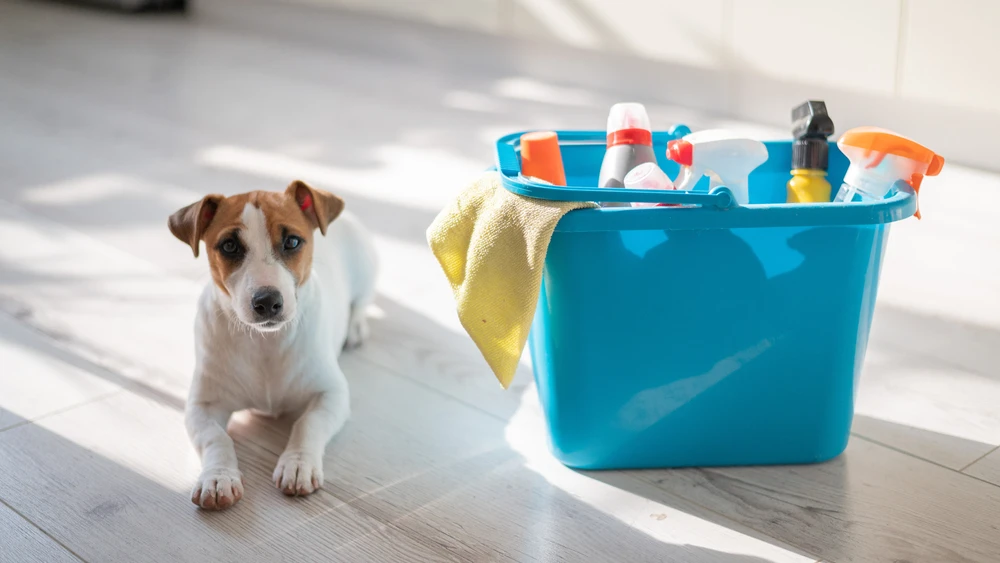
PawVerde.com – In 2024, the ASPCA reported that 6.5% of pet poison calls were directly linked to exposure to household cleaning products. As pet owners shift toward eco-friendly alternatives, understanding the distinction between mechanical tools and non-toxic chemical solutions is critical to preventing accidental ingestion, inhalation, or skin contact.
The Mechanical vs. Chemical Decision Matrix for Pet Messes
To manage pet messes effectively, use mechanical tools (like rubber brushes or wool dryer balls) for hair and dander removal, and enzymatic natural solutions (like Puracy or Bean & Lily) for organic stains and odors. Mechanical tools physically lift debris, while enzymatic cleaners chemically break down proteins in urine.
When to use physical tools
Mechanical intervention is the primary defense against physical debris. For instance, using 100% wool dryer balls in the laundry can knock pet hair loose through a constant bouncing action. This method is highly efficient, capable of reducing drying time by up to 25% while remaining reusable for over 1,000 loads. A common failure mode in laundry management is relying solely on liquid detergents; without the physical agitation of dryer balls, hair often remains trapped in fabric fibers.
When to use enzymatic solutions
Organic messes require a different biological approach. According to EcoPro Carpet & Upholstery Cleaning, Inc., it is necessary to use enzymatic cleaners to target and hydrolyze specific stain molecules like proteins or fats. This is particularly vital for urine, as these cleaners contain enzymes that neutralize odors at the molecular level rather than masking them. Using a standard soap instead of an enzyme-based solution can actually result in a failure to remove the source of the scent, leading to repeat accidents.
| Cleaning Method | Best For | Eco-Friendly Tool/Solution Example | Key Advantage |
|---|---|---|---|
| Mechanical | Hair, dander, and lint | Smart Sheep Wool Dryer Balls | Reduces drying time and physical debris |
| Enzymatic | Urine and organic stains | Puracy Carpet and Upholstery Shampoo | Breaks down proteins at a molecular level |
| Natural Surfactant | General floor cleaning | Bean & Lily Pet-Safe Floor Cleaner | Non-toxic residue for paw safety |
| Physical Agitation | Surface hair removal | O-Cedar Fur & Dust Mop | High-speed hair collection |
Effective maintenance requires matching the tool to the mess type. As shown in the table, Smart Sheep Wool Dryer Balls handle physical debris, while Puracy Carpet and Upholstery Shampoo ($15.99) targets biological proteins.
High-Shedding Protocol: Integrating Tools for Maximum Allergen Removal
Mt. Airy notes that “the most effective pet hair management combines regular grooming of your pets with consistent home cleaning using appropriate tools.” This multi-stage approach helps manage high-shedding breeds more effectively.
To maximize the removal of allergens and fur, practitioners follow a specific hierarchy of tools:
- High-Suction Vacuuming: Utilizing pet-focused vacuum cleaners, such as those manufactured by Dyson, to extract embedded hair from carpets.
- Surface Sweeping: Employing specialized tools like the O-Cedar Fur & Dust Mop, which offers a 3x multiplier for pet hair removal capability compared to standard mops.
- Laundry Integration: Adding wool dryer balls to every load of pet bedding to ensure loose hair is separated from the fabric.
Vacuuming alone may not suffice for heavy shedders. To prevent hair from remaining trapped in textiles, one should use the O-Cedar Fur & Dust Mop or 100% wool dryer balls to provide necessary mechanical agitation.
The Residue Factor: Protecting Paw Health and Respiratory Systems
Traditional cleaning products often leave behind chemical traces that pose significant biological risks. Green Llama reports that pets are particularly vulnerable because they spend so much time on the floor and are highly sensitive to strong synthetic fragrances. Because pets have faster respiratory rates and thinner skin than humans, they are more susceptible to chemical residues left behind by traditional cleaners.
The presence of Volatile Organic Compounds (VOCs) in many household cleaners is a primary concern for indoor air quality. According to hyveclean.com, these compounds can lead to headaches, dizziness, and respiratory issues in sensitive individuals, including pets. When cleaning floors, it is essential to ensure that products like Bean & Lily Pet-Safe Floor Cleaner ($6.99) or Dr. Bronner’s Sal Suds ($14.99) are used to avoid the buildup of toxic films that pets may ingest through grooming.
Surface-Specific Safety: Avoiding Accidental Damage
Using the wrong cleaning agent can result in permanent structural or aesthetic damage to the home. For example, Green Llama warns that using vinegar on natural stone or electronic screens can cause significant damage. Furthermore, Marathon Carpet Cleaning highlights a critical behavioral risk: using ammonia-based cleaners can encourage cats to mark areas with urine again, as ammonia is a component of cat urine.
| Surface Type | Risk Factor | Avoid This Product | Recommended Approach |
|---|---|---|---|
| Natural Stone | Acid erosion | Vinegar-based solutions | pH-neutral cleaners |
| Upholstery/Carpet | Stain setting | Incorrect chemical agents | Enzymatic cleaners (e.g., Puracy) |
| Cat Litter Areas | Behavioral marking | Ammonia-based cleaners | Enzymatic protein breakdown |
| Electronics | Corrosion/Streaking | Vinegar or harsh sprays | Dry microfiber or specialized wipes |
Avoid common mistakes that lead to permanent damage. Marathon Carpet Cleaning warns that using incorrect cleaning products can actually set the stain rather than remove it.