
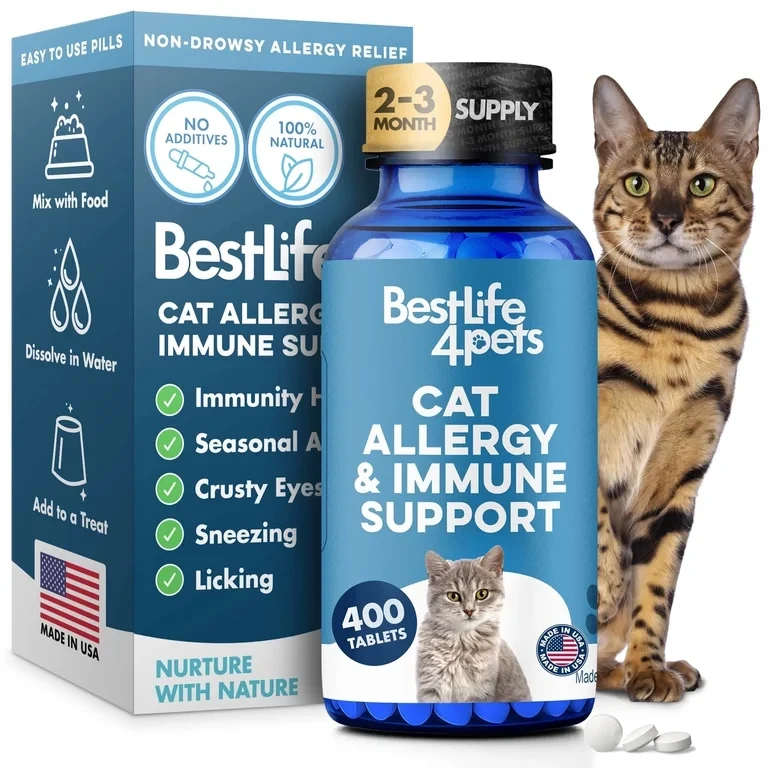
Natural Cat Allergy Relief: A Dual-Action Protocol
PawVerde.com – Natural cat allergy relief requires a dual-action approach: reducing the production of the Fel d 1 protein in the cat while simultaneously managing the human immune response through natural antihistamines like Quercetin and environmental controls like HEPA filtration and non-dusty litter.
Weekly bathing can significantly reduce allergen exposure.
The Dual-Action Protocol: Managing Both Human and Feline Triggers
A successful dual-action protocol synchronizes human symptom management with feline allergen reduction. For humans, this involves natural antihistamines like Quercetin and saline rinses. For cats, it focuses on dietary changes to lower Fel d 1 production and regular grooming to remove dander before it becomes airborne.
Addressing the “Double-Sided Allergy” dilemma requires recognizing that cleaning a house is insufficient if the biological source remains unchanged. Most allergy sufferers fail because they focus exclusively on one side of the equation—either treating their own symptoms or cleaning their environment—while ignoring the feline’s internal protein production. This creates a cycle of recurring symptoms despite high cleaning standards.
Human Support: Natural Immune Modulation
Managing the human response involves stabilizing the immune system to prevent the overproduction of histamines. This can be achieved through:
- Daily saline nasal rinses to physically flush microscopic Fel d 1 particles from sinus cavities.
- Consistent use of natural mast-cell stabilizers.
- Maintaining high-efficiency air filtration in sleeping quarters.
Feline Support: Reducing Fel d 1 at the Source
True relief comes from targeting the cat’s biology. While many believe that “hypoallergenic” breeds exist, no cat is truly allergen-free. Instead, focus on:
- Dietary interventions designed to neutralize the Fel d 1 protein in saliva.
- Regular grooming schedules to capture dander before it enters the air.
- Reducing the frequency of self-grooming through specialized feline nutrition.
A common failure mode occurs when owners attempt to manage allergies solely through increased vacuuming. Because Fel d 1 is microscopic and highly adhesive, standard cleaning often merely redistributes the protein rather than removing it.
The Science of Fel d 1: Why Traditional Cleaning Often Fails
The primary culprit in feline allergies is not the hair itself, but a specific protein known as Fel d 1. This protein is produced in the cat’s sebaceous glands and salivary glands. When a cat grooms itself, it spreads this protein across its fur. As the saliva dries, the protein becomes part of the dander that eventually sheds into the environment.
Traditional cleaning methods often fail because Fel d 1 is exceptionally small and lightweight. It behaves more like a gas than a solid particle, allowing it to linger in the air for extended periods and penetrate deep into upholstery and carpets. Furthermore, the concentration of Fel d 1 varies significantly between individual cats; one cat may produce negligible amounts, while another may produce levels that trigger severe reactions in even seasoned allergy sufferers.
Counterintuitively, many people believe that removing all hair from the home will solve the problem. However, a hair-free home can still be highly allergenic if the Fel d 1 protein remains embedded in the dust and fabric fibers. Effective management must target the protein’s presence, not just the visible hair.
Natural Supplement Deep-Dive: Quercetin, Nettle, and Butterbur
Natural antihistamine alternatives include Quercetin, which stabilizes mast cells to prevent histamine release; Stinging Nettle, which provides anti-inflammatory support; and Butterbur, used for seasonal relief. Unlike pharmaceutical antihistamines, these often require consistent daily use to build efficacy, typically showing results over several days or weeks.
| Supplement | Primary Mechanism | Expected Onset | Best For |
|---|---|---|---|
| Quercetin | Mast cell stabilization | Several days to weeks | Chronic, daily management |
| Stinging Nettle | Anti-inflammatory support | Variable | Acute inflammatory symptoms |
| Butterbur | Histamine modulation | Days of consistent use | Seasonal or periodic spikes |
Selecting the right supplement depends on the specific nature of the allergic response. Quercetin is often prioritized for those seeking long-term stability, whereas Stinging Nettle is utilized more for its direct anti-inflammatory properties during flare-ups.
Environmental Control: Beyond Basic Vacuuming
Effective environmental management requires moving away from traditional “dry” cleaning methods. Using a broom or a standard vacuum without specific filtration can actually worsen symptoms by kicking microscopic Fel d 1 particles back into the breathing zone.
Warning: Avoid using dry sweeping or unrated vacuum cleaners. These methods redistribute allergens throughout the room rather than capturing them.
The Litter Box Factor: Neutralizing Airborne Dust
The litter box is a major source of airborne particles that can carry Fel d 1 into the air. To mitigate this, implement the following:
- Switch to non-dusty, natural litter options such as corn or wood-based products.
- Use a covered litter box to contain dust during use.
- Clean the area around the box daily using damp cloths rather than dry dusters.
Advanced Eradication: Steam and UV-C
To reach deep-seated allergens, advanced technologies are necessary. Steam cleaning uses high-temperature moisture to break down the protein structure of Fel d 1 on hard surfaces and certain fabrics. UV-C light technology is increasingly used in air purifiers to assist in neutralizing biological particles, though its primary benefit remains the filtration of the protein itself via HEPA-grade systems.
The Travel & Guest Protocol for Allergy Management
Managing allergies while traveling or hosting guests requires a structured approach to prevent “allergy spikes” caused by unexpected exposure. Implementing a protocol can significantly reduce the risk of a reaction when visiting homes with cats or traveling to pet-friendly locations.
- Decontamination: When visiting a home with cats, change your clothing immediately upon arrival and use a damp cloth to wipe exposed skin.
- Airflow Management: If staying in a guest room, request that the room be equipped with a HEPA air purifier and kept “cat-free” for at least 24 hours prior to arrival.
- Personal Barriers: Use saline nasal sprays before and after travel to clear any inhaled particles from the nasal passages.
Failure to follow a decontamination protocol often leads to “delayed reactions,” where symptoms intensify several hours after the initial exposure due to the time required for the immune system to respond to the inhaled protein.
FAQ
Does bathing a cat actually work for allergy relief?
Yes, weekly bathing can reduce allergen levels by approximately 84% by physically removing dander and Fel d 1 from the fur.
Can I just keep my cat out of my bedroom?
While helpful, restricting a cat to one room does not fully limit allergens, as Fel d 1 is microscopic and travels easily through air currents and on clothing.
Why do kittens seem to cause fewer allergies?
Kittens often trigger fewer reactions because they engage in less self-grooming and have not yet developed the same high concentrations of Fel d 1 found in adult cats.