
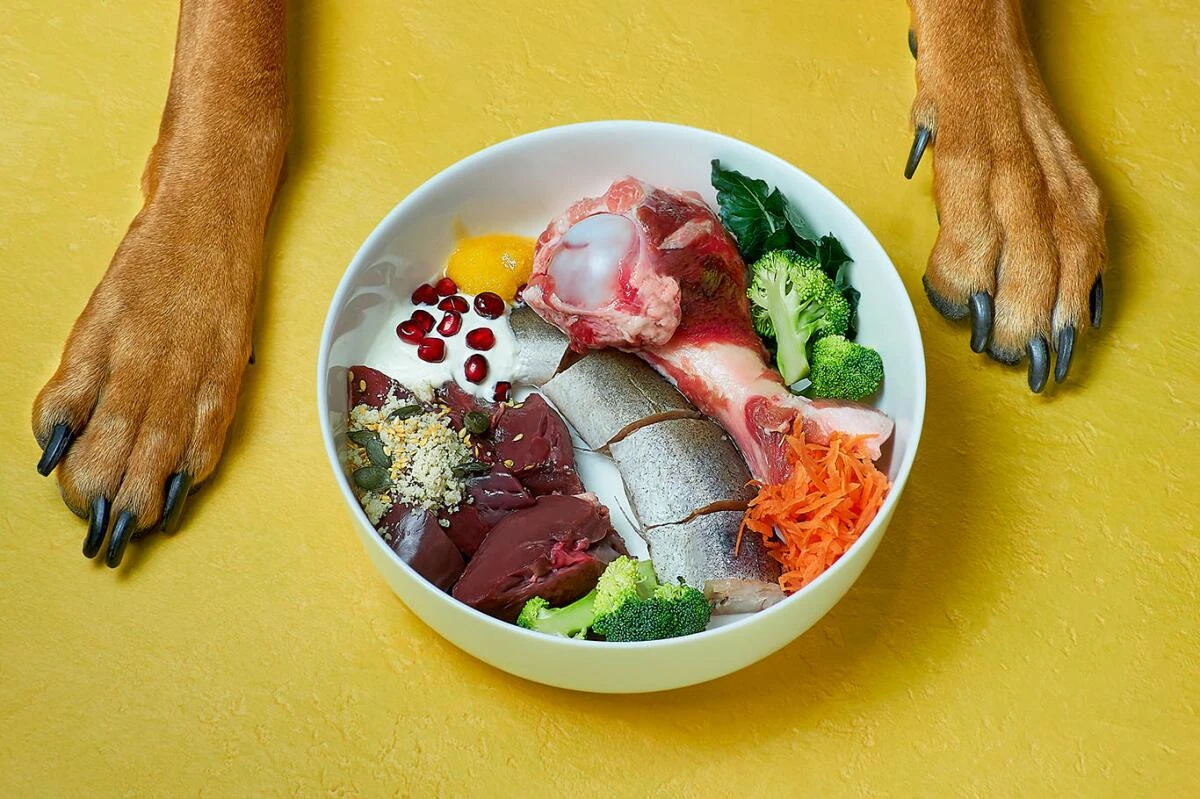
Natural Pet Food Diets: Avoiding Nutritional Failure
PawVerde.com – Natural pet food diets offer control over ingredients and freshness, but they carry a high risk of nutritional failure. Research shows that 94% of homemade dog food recipes miss essential nutrients, making professional formulation or veterinarian-approved supplements critical to prevent irreversible health issues like bone softening.
Maximizing Nutrient Uptake: The Bioavailability Matrix
To maximize nutrient uptake, match cooking methods to specific ingredients: steam vegetables like carrots to increase beta-carotene availability, but serve leafy greens like spinach raw to preserve folate. Use slow cooking or steaming for proteins to ensure digestibility while avoiding the destruction of heat-sensitive vitamins.
Achieving biological availability is a complex task with very little margin for error. While owners often focus on the quantity of food, the actual absorption of micronutrients depends heavily on how those ingredients are processed. A significant failure mode occurs when owners switch from a diet incorporating animal-based foods to a diet with an increased percentage of plant-based foods, or exclusively plant-based foods. Such shifts have been predicted to increase the risk of inadequate intakes of several vitamins, specifically Vitamin A, B vitamins (notably B12), and Vitamin D, as well as critical minerals like calcium, zinc, heme iron, and choline.
Steam vs. Raw: The Vitamin Trade-off
Nutrient accessibility changes based on thermal processing. While some vitamins are lost during cooking, others become more available through heat. For instance, steaming carrots increases the bioavailability of carotenoids.
- Steam-processed vegetables: Increases the bioavailability of carotenoids in carrots.
- Raw leafy greens: Preserves heat-sensitive folate found in spinach.
- Slow-cooked proteins: Enhances digestibility of connective tissues without destroying heat-sensitive vitamins.
The Bioavailability of Plant-based Minerals
Relying on plant sources for minerals can lead to systemic deficiencies if not managed with precision. Minerals such as zinc and heme iron are often more readily absorbed from animal tissues than from plant matter. When preparing natural recipes, the density of these micronutrients must be monitored to prevent long-term metabolic issues.
Proven Recipes: From Pup Loaf to Salmon Relief
Nutritional stability depends on meeting specific metabolic benchmarks. The following recipes provide precise targets for protein, fat, and energy density.
| Recipe Name | Protein % | Fat % | Energy Density (kcal/oz) |
|---|---|---|---|
| Dr. Judy’s Original Pup Loaf | 15.67% | 3.57% | 28.8 kcal/oz |
| Salmon & Sweet Potato Skin Relief | 16.92% | 4.05% | 32.15 kcal/oz |
The data shows how different ingredient bases shift caloric concentration, such as the difference between the 28.8 kcal/oz in the Pup Loaf and the 32.15 kcal/oz in the Salmon recipe.
Dr. Judy’s Original Pup Loaf: Macro Breakdown
Developed by Dr. Judy Morgan, this recipe is designed for stability and ease of preparation. The primary technique involves the Baking Pup Loaf method: finely chop and mix all ingredients except supplements together, then pour into a loaf, casserole, or muffin pan. The mixture should be covered to retain moisture and baked at 325° F for 30 to 60 minutes. It is a critical safety step to add supplements only after the food has cooled and to mix thoroughly to ensure even distribution.
Salmon & Sweet Potato Skin Relief: Step-by-Step
This recipe combines steamed and cooked elements to meet dietary requirements. Prepare it by cooking salmon thoroughly and removing all bones. Mash sweet potatoes that have been baked or steamed until soft. Steam green peas and spinach until tender, then combine all ingredients in a large bowl. Add veterinarian-recommended supplements after the mixture has cooled completely.
The High Stakes of Nutritional Imbalance
The consequences of nutritional imbalance are often delayed but can be devastating. When a diet is not formulated by a professional, the margin for error is incredibly slim. According to research from the University of California, Davis School of Veterinary Medicine, 95% of homemade recipes are deficient in at least one essential nutrient, and 84% lack multiple required nutrients.
Imprecise measurements of minerals like zinc and calcium can lead to physiological damage. Because homemade diets have so little margin for error, they should never be used as a replacement for professional veterinary guidance.
Meal Prep & Safety Protocol for Large Batches
Strict adherence to food safety is necessary when preparing large quantities of natural food.
- Batch Cooking: Use consistent methods like slow cooking (adding 1/4 to 1/2 cup of water or bone broth and cooking on low for 6-8 hours) to ensure even texture.
- Airtight Storage: Store prepared portions in airtight containers to prevent oxidation and contamination.
- Freezing: Large batches should be portioned into individual servings and frozen to maintain freshness over time.
Shortcut: When transitioning to homemade food, never switch the entire diet overnight. Start by replacing only 25% of the usual meal with the new recipe to prevent digestive upset.
The 7-Day Transition Rule
To prevent gastrointestinal distress, follow a one-week transition plan. Gradually increase the homemade portion while decreasing the old food to allow the gut to adjust to new fiber and nutrient densities.
Species-Specific Requirements: Dogs vs. Cats
Dogs require approximately 37 essential nutrients and roughly twice the protein of humans to meet amino acid needs. Cats require 40 essential nutrients and must consume animal fats to obtain arachidonic acid and vitamin A, as they cannot synthesize these internally.
Species-specific needs dictate that a dog’s recipe may be unsuitable for a cat. For example, cats cannot synthesize vitamin A and must receive it through their diet. Furthermore, arachidonic acid is found only in animal fat sources, making vegetarian-style diets for cats impossible.
FAQ
Can I feed my cat a vegetarian diet?
No. According to UK Pet Food, cats must receive vitamin A and arachidonic acid through their diet because they cannot synthesize them. Since arachidonic acid is found only in animal fats, a vegetarian diet is not viable for cats.
How do I transition my dog to homemade food?
To avoid digestive upset, start by replacing 25% of their usual meal with your homemade recipe. Gradually increase the portion of the new food over the course of one week until they are fully transitioned to the natural diet.
What are the biggest risks of homemade pet food?
The primary risks involve deficiencies in nutrients like calcium, zinc, or vitamin D. Without professional formulation, there is a high risk of long-term health issues.