
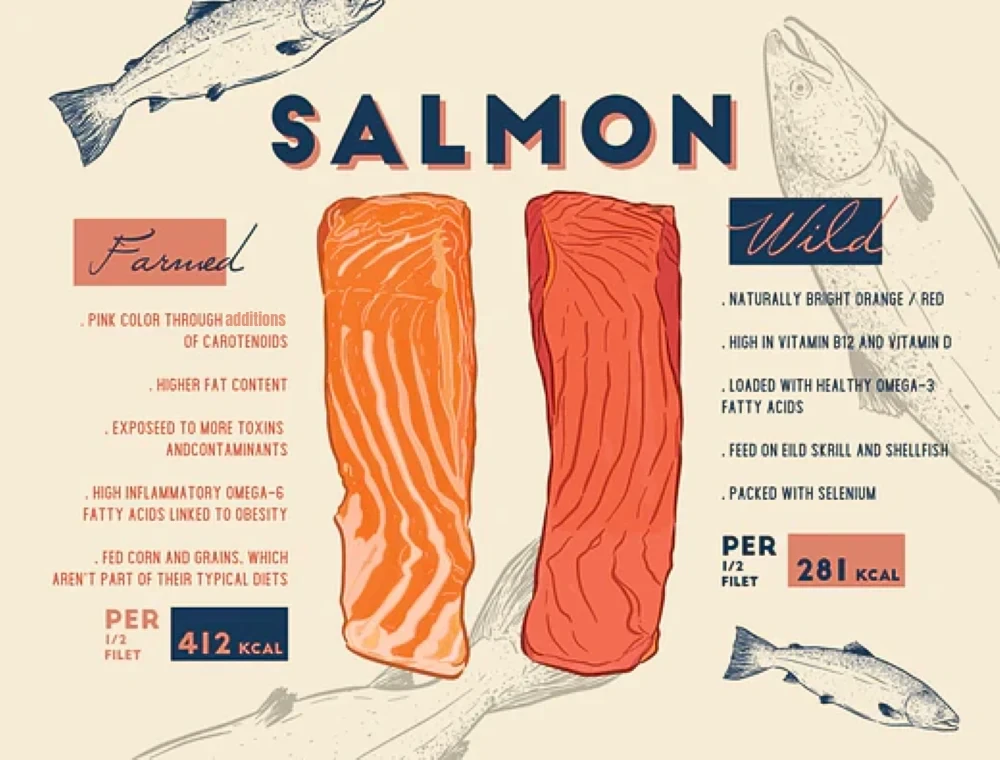
PawVerde.com – Choosing between wild-caught and farmed fish for your cat involves balancing nutrient density against contaminant risks. While wild salmon offers superior ALA and a leaner profile, farmed salmon provides higher caloric density and potentially lower mercury levels, making the “best” choice dependent on your cat’s specific health needs and age. Wild Atlantic salmon contains 251 mg of ALA per 3 oz, nearly double the 126 mg found in farmed Atlantic salmon, according to the USDA National Nutrient Database .
The Heavy Metal vs. Omega-3 Risk Matrix
Owners must weigh mercury against omega-3 concentrations when selecting fish. Wild salmon may contain higher mercury levels due to bioaccumulation, while farmed salmon provides higher levels of EPA and DHA, such as the 733 mg of EPA and 935 mg of DHA found in a 3 oz serving of farmed Atlantic salmon.
The biological makeup of these fish creates a distinct nutritional profile. Wild salmon is typically leaner and possesses a bolder flavor. However, this movement through various ocean layers can lead to higher mercury levels, a risk monitored by the Singapore Food Agency.
The Mercury Trade-off in Wild Species
Mercury accumulation is a primary concern for long-term feline health. While wild salmon provides a high-quality protein source, the bioaccumulation of heavy metals remains a documented risk in wild-caught specimens. Regulators like the Singapore Food Agency monitor these levels closely to ensure seafood safety.
Contaminant Profiles in Aquaculture
Farmed fish presents a different set of chemical considerations. While they may avoid the heavy metal accumulation seen in wild migratory species, they can carry higher levels of other potentially carcinogenic contaminants, such as dioxins and PCBs. This occurs because of the specific environments and feed used in aquaculture settings.
| Criterion | Wild-Caught Fish | Farmed Fish |
|---|---|---|
| Fat Content | Generally leaner | Higher fat content |
| Mercury Risk | Potentially higher (bioaccumulation) | Generally lower |
| Contaminant Risk | Lower PCBs/Dioxins | Potentially higher PCBs/Dioxins |
| Caloric Density | Lower (approx. 142 kcal per 3 oz) | Higher (approx. 208 kcal per 3 oz) |
This comparison highlights that there is no perfect option. Choosing wild-caught fish minimizes exposure to PCBs, but choosing farmed fish may reduce heavy metal intake. A counterintuitive reality is that a “cleaner” looking fish might actually carry more synthetic contaminants depending on its origin.
Decoding the Cat Food Label: Fish Meal vs. Whole Fish
The nutritional value of farmed versus wild-caught seafood is comparable in many processed pet foods. Research suggests the more important issue to consider when shopping for seafood is sourcing, rather than the binary distinction between wild or farmed.
To identify quality, owners can look for specific certification markers on pet food packaging. These indicators provide insight into the origin and production methods of the fish used in the recipe.
- ASC Certification: The Aquaculture Stewardship Council provides labels that indicate more responsible farming practices.
- MSC Certification: The Marine Stewardship Council certification identifies seafood that has been caught using sustainable wild-harvesting methods.
- Specific Species Names: Labels that list “Wild Atlantic Salmon” are more transparent than those simply stating “Fish Meal.”
- Whole Fish vs. Meal: Whole fish preserves more natural nutrient integrity than highly processed fish meal.
Identifying ASC and MSC Certifications
Certifications serve as a proxy for quality control. By using the Sustainable Seafood Selection technique, owners can look for ASC or MSC logos to ensure the seafood meets established standards for responsible sourcing.
The Impact of Processing on Nutrient Integrity
Processing can strip away the very benefits owners seek. High-heat rendering of fish into meal can degrade sensitive fatty acids. Even if the source is wild-caught, a highly processed “fish meal” may lack the bioactive compounds found in whole-fish preparations.
The Thiamine Trap: Why Raw Fish is a High-Stakes Risk
Feeding raw fish to a cat is a significant nutritional error. Raw fish contains an enzyme that destroys thiamine (Vitamin B1), a vital nutrient for feline neurological health. This can lead to a rapid and dangerous deficiency if raw fish becomes a staple of the diet.
The Vitamin B1 Deficiency Mechanism
Thiamine is essential for energy metabolism in cats. When the thiamine-destroying enzyme in raw fish is ingested, it breaks down the B1 available in the cat’s system. This failure mode can result in symptoms ranging from loss of appetite to seizures and death.
Bacterial Risks: Salmonella and Listeria
Beyond nutritional deficiencies, the American Kennel Club notes that raw fish bears the risk of carrying foodborne bacteria. Salmonella and Listeria can cause acute gastrointestinal distress in cats, making cooked fish a much safer alternative for home-prepared meals.
Nutritional ROI: Is the Wild-Caught Premium Worth It?
The “Nutritional ROI” depends on the cat’s life stage. For senior cats needing joint support, the higher EPA/DHA levels in certain fish are beneficial. However, for healthy adult cats, the 50% higher calorie count in farmed salmon (208 vs 142 kcal) may lead to weight gain if not strictly managed.
Calculating the value of premium fish requires looking at the specific fatty acid concentrations. According to the USDA National Nutrient Database, farmed Atlantic salmon provides 733 mg of EPA and 935 mg of DHA per 3 oz serving. In contrast, wild Atlantic salmon provides 273 mg of EPA and 952 mg of DHA per the same serving size.
Caloric Density and Weight Management
Weight management is a critical factor in feline longevity. Because farmed salmon contains 50% more calories than its wild counterpart (208 kcal vs 142 kcal), it is a much denser energy source. For cats prone to obesity, the leaner profile of wild salmon offers a safer way to provide fish without excessive caloric loading.
Comparing EPA and DHA Levels
While farmed salmon is higher in EPA, the difference in DHA is minimal. The Nutrition Source notes that “EPA and DHA can be made from another omega-3 fat called alpha-linoleic acid (ALA), so they are more accurately termed ‘conditionally essential’ fats.” This means the body can convert certain fats, but direct intake of EPA/DHA remains superior for inflammation management.
Species-Specific Selection Guide
Determine the best fish based on specific physiological objectives. Whether the goal is coat health or weight management, the different fat and protein profiles of wild and farmed salmon offer distinct advantages.
| Goal | Recommended Fish Type | Reasoning |
|---|---|---|
| Skin & Coat Health | Wild Salmon | High ALA and lean protein |
| Weight Management | Wild Salmon | Lower caloric density (142 kcal) |
| Budget Protein | Farmed Salmon | More affordable and consistent |
| High Omega-3 Boost | Farmed Salmon | Higher EPA/DHA concentrations |
Best for Skin and Coat
For cats struggling with dry skin or dull fur, the nutrient density of wild-caught fish is often preferred. The higher ALA content (251 mg in wild vs 126 mg in farmed) provides the building blocks for healthy skin barriers.
Best for Budget-Conscious Protein
Farmed salmon is more affordable and available year-round, whereas wild salmon is more expensive due to its seasonal availability and the challenges of catching it. For daily protein supplementation, farmed fish offers a stable and cost-effective option.
Safe Transitioning and Feeding Protocols
Fish is a great protein source for dogs and cats. As Dr. Debra Eldredge notes, “Fish is a great protein source for dogs and cats. It’s easy to digest and it’s rich in essential amino acids.”
Follow the Safe Pet Feeding protocol to minimize risks:
Shortcut: Cook fish thoroughly to eliminate bacteria and always check for small bones before feeding to your pet.
When introducing fish, start with very small amounts to prevent digestive upset. Ensure the fish is part of a balanced diet and not the sole source of nutrition, as fish alone lacks the complete mineral profile required for feline health.
FAQ
Can I feed my cat raw fish from the grocery store?
No, raw fish carries risks of Salmonella, Listeria, and an enzyme that destroys Thiamine (Vitamin B1), which is essential for feline health. Always cook fish thoroughly to ensure it is safe for consumption.
Is farmed salmon healthier for cats than wild salmon?
It depends. Farmed salmon is higher in calories and certain omega-3s like EPA but may contain more PCBs/dioxins. Wild salmon is leaner and often higher in ALA but may have more mercury.
How much fish should my cat eat?
While general human guidelines suggest 2 servings per week, for cats, fish should be part of a balanced diet as a protein source, ensuring it is cooked and bone-free to avoid choking or digestive issues.