
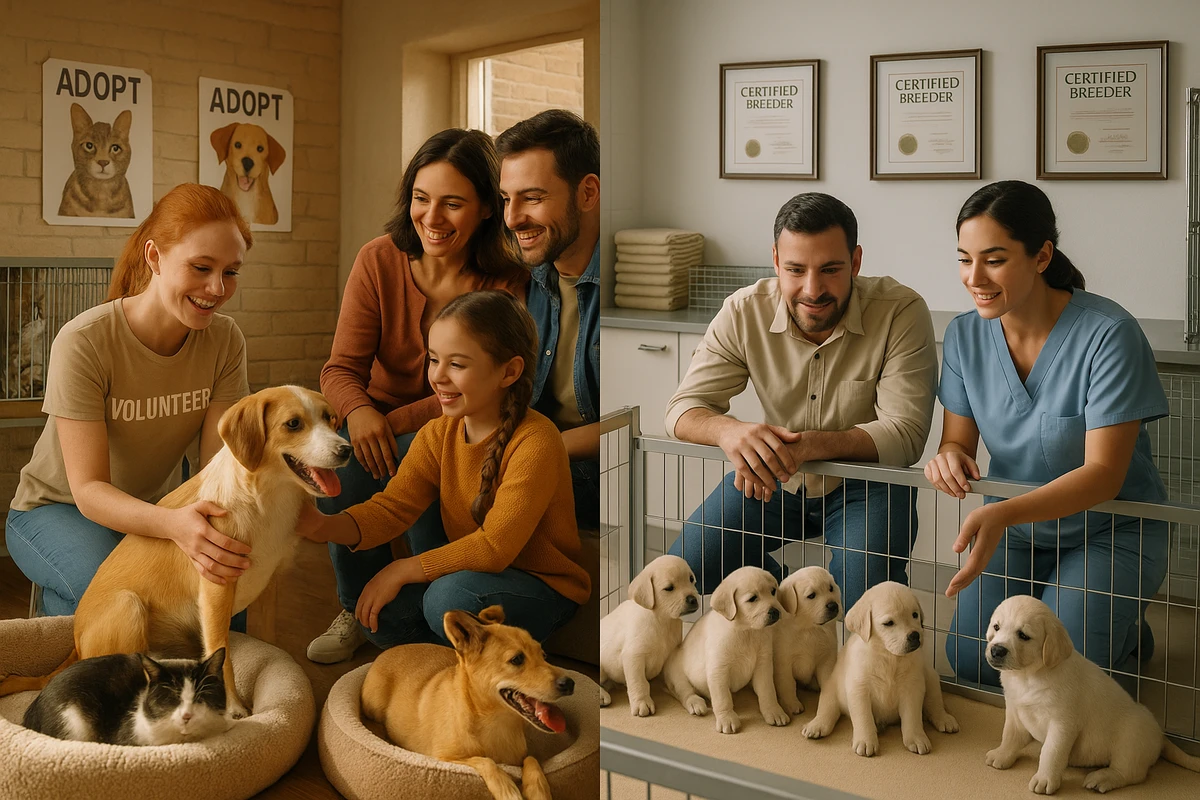
PawVerde.com – The choice between breeder and shelter is not a binary of ‘good vs. bad,’ but a balance of urgency and predictability. While adoption addresses the crisis of 6.5 million animals entering U.S. shelters annually, ethical breeding provides the long-term genetic stability and trait predictability required for specific lifestyle needs.
6.5 million companion animals enter U.S. animal shelters annually, contributing to a cycle where approximately 700,000 animals are euthanized each year due to overcrowding.
Beyond the Binary: A Decision Matrix for New Owners
To choose between a breeder and a shelter, evaluate your constraints. Prioritize adoption to help mitigate the 700,000 animals euthanized annually in overcrowded shelters. Alternatively, choose an ethical breeder if you require high predictability in size, coat, or temperament.
Deciding how to acquire a pet requires analyzing specific lifestyle variables rather than following emotional impulses alone. While 47% of people in a 2016 study by Bir, Widmar and Croney reported they adopted because “it was the right thing to do,” other owners prioritize different metrics.
The Budget-First Path
Barkio notes that adopting a dog from a shelter is a compassionate, cost-effective, and ethical way to bring a new pet into your life. Financial constraints often dictate the acquisition method, as shelter fees are significantly lower than the thousands of dollars typically required for a puppy from a commercial source.
The Predictability-First Path
For owners who cannot afford the “trial and error” of a mixed-breed’s temperament, Barkio reports that buying from a breeder offers predictability in traits and health. This is particularly relevant for those who require a specific size or energy level to match their living situation.
The Allergy and Lifestyle Constraint
Research from Bir, Widmar and Croney indicates that 33% of owners express a preference for a specific breed or type of dog. This preference often stems from physiological needs, such as hypoallergenic coats, or specific behavioral requirements that a shelter’s mixed-breed population may not meet.
| Criterion | Shelter/Rescue Adoption | Ethical Breeder |
|---|---|---|
| Cost | Typically much lower | Can cost thousands of dollars |
| Predictability | Low (often mixed breeds) | High (known genetics/traits) |
| Ethical Impact | Reduces euthanasia/demand | Supports genetic sustainability |
| Behavioral Certainty | Variable/Unknown history | High (based on parentage) |
Owners must decide between immediate social impact and long-term biological certainty. This choice is shaped by whether one prioritizes reducing the 6.5 million annual shelter intakes or securing specific genetic traits.
Vetting the Source: Red Flags vs. Green Flags
The most critical step is identifying the difference between a responsible provider and an exploitative one. Failing to vet a source can result in the accidental support of puppy mills that prioritize profit over animal welfare.
How to Spot a Puppy Mill
Luckydog Animal Rescue warns that puppy mills prioritize profit over animal welfare. These facilities often keep dogs in inhumane, overcrowded, and unsanitary conditions, frequently separating puppies from their mothers too early to maximize turnover. If a seller cannot show you where the animals live or refuses to let you meet the mother, it is a major failure mode.
The Ethical Breeder’s Checklist
Ethical breeding involves more than just producing puppies; it requires a commitment to the entire lifecycle of the animal. According to Paws and Reflect, ethical breeding involves thoughtful pairing and rehoming contracts. A legitimate breeder should provide:
- Comprehensive health and temperament evaluations.
- Detailed genetic history of the parents.
- A signed contract that includes a requirement to return the dog to them if the owner can no longer care for it.
Evaluating Shelter Intake and Rehoming Ratios
Humane Animal Partners suggests that adopting helps combat unethical breeding practices like backyard breeders. When evaluating a rescue, look for transparency regarding their ability to provide permanent homes and their management of intake numbers.
The Shelter Crisis and the Ethics of Euthanasia
The ethical weight of adoption is driven by the sheer scale of the animal homelessness crisis in the United States. Data from The Ohio State University shows that 3.3 million dogs enter U.S. shelters annually.
The consequence of this massive influx is a tragic reality of resource scarcity. Luckydog Animal Rescue reports that 700,000 animals are euthanized each year due to overcrowded shelters. This creates a moral imperative for many; as Bir, Widmar and Croney documented, nearly half of adopters (47%) chose their method specifically because they felt it was the right thing to do to prevent such outcomes.
The Genetic Dilemma: Breed Labels and Misidentification
The Ohio State University notes that shelter dogs are often mislabeled compared to the results of actual genetic analysis. Because many shelter dogs are multi-breed mixes, visual perception often fails to identify the true genetic makeup of the animal.
The Ohio State University has documented that shelter dogs are often mislabeled compared to the results of actual genetic analysis. This is a significant pitfall for owners who may be seeking a specific temperament or hypoallergenic trait only to find the dog’s biology is entirely different.
Warning: Relying on visual “breed” labels can lead to unexpected medical costs or behavioral challenges if the dog’s true genetic makeup is unknown.
This misidentification has broader social implications. The Ohio State University notes that breed labels can negatively impact adoption decisions because of certain stereotypes and existing legislation. Furthermore, Bir, Widmar and Croney found that one-third of owners believe dogs from shelters often have behavior problems—a perception that may be exacerbated by the lack of predictable genetic history in these animals.
The Middle Ground: Breed-Specific Rescues and Sustainability
Owners can navigate the choice between commercial breeders and municipal shelters by exploring specialized options. These alternatives attempt to balance the need for specific traits with the goal of adoption.
Bridging the Gap with Breed-Specific Rescues
Breed-specific rescues cater to the 33% of owners who express a preference for a specific breed or type of dog. This allows for the acquisition of dogs with known characteristics while still addressing the urgency of animal placement.
The Sustainability Argument: Why Breeding Still Matters
While adoption is a vital tool for crisis management, the long-term health of the canine species relies on controlled, ethical reproduction. As stated by the Paws and Reflect Blog,
“Ethical breeding is not a spigot which can simply be turned off today and turned back on when there are zero homeless animals.”
Adoption addresses the immediate urgency of the 700,000 animals at risk of euthanasia, but ethical breeding sets the standard for future sustainability by ensuring that new generations of dogs are born with health, temperament, and genetic stability as their primary objectives.
FAQ
Is it more ethical to adopt or buy from a breeder?
Adoption is widely considered more compassionate due to the high number of animals in shelters (6.5 million annually), but ethical breeding is necessary for long-term species health and predictability.
How can I tell if a breeder is ethical?
Look for health and temperament evaluations, rehoming contracts, and transparency regarding genetic history, rather than just “health checks.” Ethical breeders should also allow you to see the living conditions of the animals.
Are shelter dogs more prone to behavior problems?
While one-third of owners believe this, many issues stem from breed mislabeling and the lack of predictable genetic history in mixed-breed shelter dogs, rather than an inherent flaw in shelter animals.