
PawVerde.com – Eco-friendly dog chew toys prioritize renewable materials like natural rubber, hemp, and cellulose fiber over traditional petroleum-based plastics. Choosing sustainable options reduces microplastic shedding and chemical leaching, offering a safer, biodegradable alternative that supports both your pet’s dental health and the planet’s long-term ecological stability.
Natural rubber is a renewable, plant-based material sourced by tapping Hevea brasiliensis trees to collect milky latex.
How to Spot Greenwashing in Pet Toy Packaging
To detect greenwashing, look beyond vague ‘natural’ labels. Check for specific certifications regarding BPA-free, latex-free, and phthalate-free status. Verify if materials like ‘natural rubber’ are actually 100% latex or if they contain synthetic fillers, and ensure ‘recyclable’ claims are backed by specific programs like West Paw’s Loop®.
Red Flags: Vague Terminology
Many products use “eco-friendly” or “green” as marketing buzzwords without providing technical substantiation. Industry analysts suggest that a lack of specific chemical disclosures often hides the presence of harmful additives. For instance, while some brands claim sustainability, they may fail to mention if their products contain phthalates. A more reliable standard is found in products from Project Hive, which explicitly states they are BPA-free, latex-free, and phthalates-free.
A common failure mode occurs when a toy is labeled as “natural rubber” but contains significant synthetic fillers to reduce costs. Newtop notes that some rubber toys may claim to be natural, but true 100% natural latex content is a specific distinction that separates high-quality sustainable toys from hybrid synthetics. If a package does not specify the exact percentage of natural latex, proceed with caution.
The Truth About ‘Recyclable’ Labels
The term “recyclable” is often used loosely, leading consumers to believe any plastic-like toy can be processed by standard curbside programs. This is a misconception. True circularity requires specific infrastructure. For example, West Paw offers the Loop® program, which allows owners to join a dedicated recycling initiative for their toys rather than relying on general municipal waste streams.
To ensure genuine sustainability, verify that products meet specific standards, such as Project Hive’s certification of being BPA-free and phthalate-free, or the presence of 100% natural latex in rubber items.
- Explicit certification of being BPA-free and phthalate-free (as seen with Project Hive).
- Verification of 100% natural latex content in rubber-based products.
- Participation in closed-loop recycling programs like West Paw’s Loop®.
- Clear documentation regarding the absence of synthetic dyes in fiber-based toys.
The Durability vs. Sustainability Paradox
A significant tension exists between a toy’s ability to withstand aggressive chewing and its ability to break down in the environment. natural rubber is a primary solution to this paradox, as it provides a tough yet flexible chew that can withstand gnawing without splintering, according to Newtop. However, this durability comes with a biological timeline; natural rubber typically has a biodegradability duration of 1 to 5 years.
While natural rubber is incredibly resilient, it introduces different physical properties compared to synthetic alternatives. For example, Soda Pup natural rubber flying discs are heavier than standard plastic versions. This increased density can affect flight distance during play, a trade-off for choosing a plant-based material over lightweight petroleum plastics. While a plastic disc might fly further, it will persist in the environment for centuries, whereas the natural rubber version will eventually degrade.
Material Tier List: Matching Eco-Toys to Chewing Styles
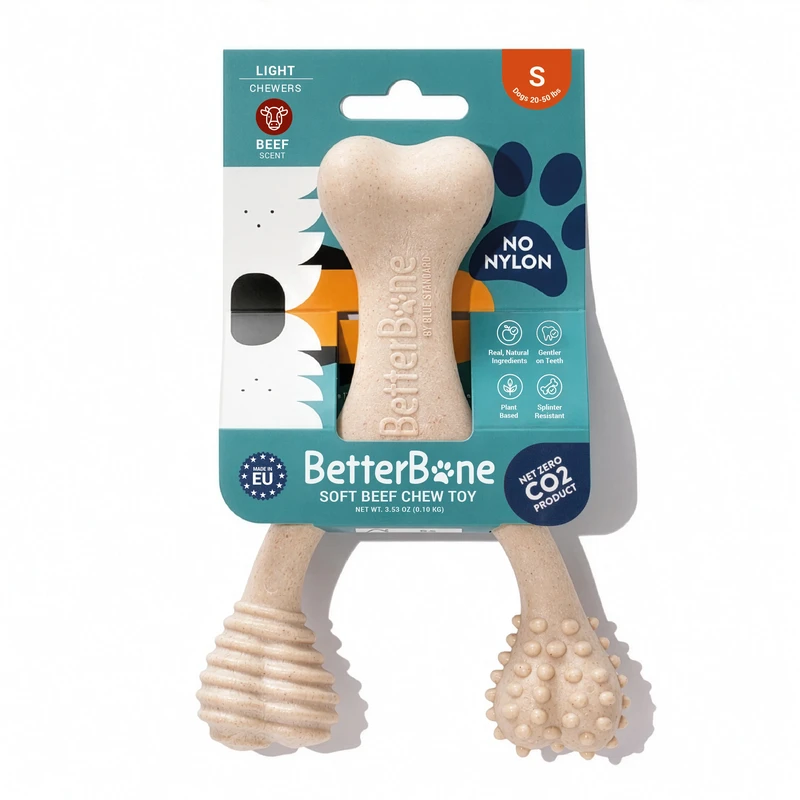
Match your dog’s chewing style to the material: ‘Destroyers’ should opt for natural rubber (like Soda Pup or Newtop) for its toughness without splintering; ‘Nuzzlers’ benefit from hemp or coconut ropes (Freya & Dax) that fray safely; and ‘Gentle Chewers’ can enjoy cellulose fiber (BetterBone) or yak milk (Himalayan) chews.
| Material Type | Best For (Chewing Style) | Sustainability Profile | Primary Safety Benefit |
|---|---|---|---|
| Natural Rubber | Destroyers | Renewable/Biodegradable | Won’t splinter like hard plastic |
| Hemp Rope | Nuzzlers | Low water/pesticide use | Frays instead of breaking |
| Coconut Fiber | Nuzzlers | Highly renewable | Shorter fibers reduce ingestion risk |
| Cellulose Fiber | Gentle Chewers | Plant-based/Biodegradable | Easier on teeth |
| Yak Milk | Gentle/Moderate | Natural/Edible | Non-toxic edible byproduct |
This guide compares materials like Freya & Dax coconut fibers, which are shorter and less likely to cause intestinal issues, against traditional options.
Heavy Duty: The Strength of Natural Rubber
For dogs that treat toys as a job, natural rubber is the superior choice. Newtop distinguishes natural rubber from silicone by noting that rubber is specifically utilized for its strength and toughness. While silicone is often used for design details or safety, natural rubber provides the structural integrity required for heavy gnawing. This makes it a much more viable option for “Destroyer” type dogs than softer, plant-based fibers.
Safe Fraying: Why Hemp and Coconut Beat Cotton
Traditional cotton rope toys can be dangerous if they break into large, swallowable chunks. In contrast, hemp is a highly sustainable crop that requires less water and fewer pesticides than cotton. Sparkly Tails reports that “Hemp rope toy frays instead of breaking, making it a safer choice for your dog.” This fraying mechanism ensures that the toy wears down gradually rather than snapping suddenly. Similarly, Freya & Dax utilizes coconut fibers, which are shorter and significantly less likely to cause intestinal issues than long-strand cotton ropes.
Plant-Based Alternatives: Cellulose and Yak Milk
For dogs that prefer a slower, more methodical chew, cellulose and yak milk offer excellent alternatives. BetterBone produces cellulose fiber chews, which are plant-based materials that are easier on both the dog’s teeth and the environment. For an edible option, Himalayan yak milk chews provide a natural, non-toxic way to satisfy chewing urges. These options avoid the microplastic shedding associated with synthetic chew bones.
Safety Risks: From Intestinal Tangling to Dental Damage
Owners must account for unique physical risks when moving away from plastic, such as the tendency for long rope fibers to tangle in intestines or the potential for hard yak milk chews to damage teeth if used without supervision.
One critical pitfall involves the physical structure of fiber toys. Long rope fibers from traditional or poorly constructed sustainable ropes can tangle in a dog’s intestines. Additionally, while hemp is generally safer because it frays, some dogs may experience allergic reactions to hemp fibers, leading to skin irritation or stomach distress. Owners should monitor for these signs immediately after introducing a new material.
Hardness levels also pose a risk. While natural rubber is flexible, extremely hard products like yak milk chews can potentially damage teeth if a dog chews with excessive force without supervision. Conversely, while avoiding the chemical risks of plastic, owners must remain vigilant that traditional plastic toys do not pose immediate choking hazards if they shatter into sharp pieces.
The Economics of Eco-Friendly Play
While the upfront cost of a $19.99 Project Hive toy is higher than a generic plastic alternative, a durable natural rubber toy may lower the total cost of ownership by replacing multiple cheap versions that break quickly.
Market pricing for these specialized materials includes:
- Soda Pup (Natural Rubber): Starting at $7.50
- Freya & Dax (Coconut Rope): $15.99
- Himalayan (Yak Milk): $16.79
- Project Hive (Recyclable/BPA-free): $19.99
- BetterBone (Cellulose Fiber): $19.99
While the $19.99 price point for a Project Hive toy is higher than a generic plastic toy, the environmental benefits and the reduction in frequent replacements provide a different value proposition for the conscious consumer.
FAQ
Is hemp safer than cotton for dog toys?
Yes, hemp rope is more sustainable as it requires less water and pesticides. Crucially, hemp rope tends to fray instead of breaking, which reduces the risk of a dog swallowing large, dangerous pieces compared to cotton.
Can I compost my dog’s eco-friendly toys?
It depends on the material. While natural fibers like hemp or coconut may be compostable, you must ensure no synthetic dyes or plastic binders are present. Always check if the manufacturer specifies home vs. industrial composting.
Why is natural rubber heavier than plastic toys?
Natural rubber is a dense, plant-based material. This added weight can make flying discs (like those from Soda Pup) fly shorter distances compared to lightweight synthetic alternatives.