
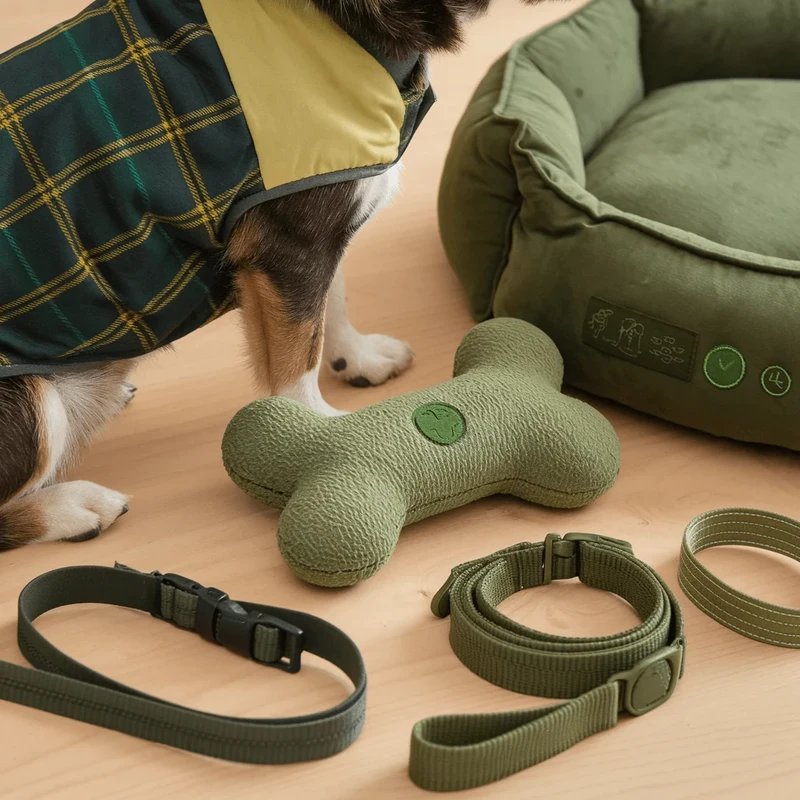
Eco-Friendly Pet Products for Dogs: A Sustainable Guide
PawVerde.com – Eco-friendly pet products are items designed to minimize environmental impact through sustainable materials like hemp, bamboo, and natural rubber, while ensuring non-toxic safety for your dog. True sustainability means choosing products that improve your pet’s life without making the planet’s future worse. The global market for sustainable pet products has reached an estimated $35 billion.
How to Spot Greenwashing in Pet Marketing
To detect greenwashing, look beyond ‘earth-inspired’ marketing. Verify claims by checking for specific certifications like GOTS for textiles, FSC for wood, or TÜV OK Compost for waste bags. Avoid products that use recyclable packaging to mask poor materials, short lifespans, or unethical production methods.
A common failure mode in pet shopping is the confusion between bio-based and truly compostable materials. Bio-based plastics can be non-compostable, such as bio-PET (polyethylene terephthalate), which is derived from biological sources but behaves like traditional plastic in the environment. In contrast, materials like PLA (polylactic acid) and PHA (polyhydroxyalkanoates) are designed to be compostable. Relying on the term “bio-based” without verifying the specific polymer type can lead to accidental plastic accumulation.
The Lifecycle Comparison: Standard Plastic vs. Sustainable Materials
The environmental footprint of pet ownership is heavily influenced by the sheer volume of single-use items. In the United States alone, an estimated 5 billion plastic dog waste bags are used annually. These traditional plastics can leach toxins into the soil and are notorious for their longevity, often sticking around for centuries in landfills.
Sustainable alternatives, such as those produced by Hevea, offer a different trajectory. Hevea products are 100% biodegradable, meaning they return to the earth rather than persisting as microplastics. The difference begins at the extraction phase and ends with the biological breakdown of the material.
| Material | Sustainability Benefit | Durability Score | End-of-Life |
|---|---|---|---|
| Hemp | Low water usage; renewable | High | Biodegradable |
| Cotton (Organic) | Reduced chemical pesticides | Medium | Biodegradable |
| Natural Rubber | Non-toxic; renewable source | Very High | Biodegradable |
| Bamboo | Rapidly renewable; lightweight | Medium | Compostable |
| Stainless Steel | Zero leaching; extremely long-lived | Extreme | Infinitely Recyclable |
Material selection dictates whether waste is avoided through longevity or managed through biological breakdown. For example, stainless steel offers extreme durability to prevent waste, while hemp and natural rubber are designed to return to the earth.
Top Sustainable Materials for Dog Gear
Selecting materials like natural rubber for toys, hemp for textiles, or stainless steel for feeding stations helps reduce a pet’s chemical load. These options aim to minimize long-term environmental waste.
“These things are nearly indestructible… These immediately became my dogs favorite and after several months the pups remain as happy and interested as when the toys first came out of the…” Such durability is essential to prevent the waste generated by broken, cheap plastic toys.
Stainless steel is a highly sustainable choice for feeding stations because it does not leach chemicals and can last for years. This durability effectively removes the item from the waste stream for a long duration.
The Reality of Compostable Poo Bags
The effectiveness of “green” waste management depends heavily on disposal methods. Many products marketed as eco-friendly fail to meet their potential if they are not processed correctly.
Warning: Research indicates that compostable poo bags must reach the correct environment to be effective. If these bags end up in a standard landfill, they may not break down as intended.
The Landfill Problem: Why ‘compostable’ isn’t enough
A significant gap exists between product design and consumer behavior. Research indicates that only 5% of dog owners compost their compostable poo bags at home. Furthermore, it is estimated that only 3% of compostable plastic is actually fully composted. When these bags are sent to a landfill, the lack of oxygen prevents the biological breakdown required for them to be truly sustainable.
Industrial vs. Home Composting
Many bags require the high-heat conditions of an industrial composting facility to degrade. Without access to these facilities, a “compostable” bag functions similarly to a traditional plastic bag in a landfill setting. Owners should check for specific certifications, such as those distinguishing between “Home Compostable” and “Industrial Compostable,” to ensure the product matches their local waste management capabilities.
Budget-Friendly Eco-Swaps and DIY Solutions
sustainable pet care can be achieved through mindful habits. Many owners find success by prioritizing durability and reducing the frequency of new purchases.
- Walk Smart: Carry a reusable water bottle and use biodegradable waste bags to reduce single-use plastic waste during daily outings.
- Prioritize Durability: Choose high-quality gear over “fast-fashion” pet accessories. Investing in one durable item is more cost-effective and sustainable than buying multiple cheap replacements.
- Upcycle and Reuse: Instead of discarding old items, find ways to repurpose them.
Upcycling: Turning old T-shirts into tug toys
One of the simplest DIY solutions is upcycling old cotton clothing. Strips of durable T-shirt fabric can be braided tightly to create effective tug toys for dogs. This method diverts textile waste from landfills and provides a zero-cost toy for your pet.
The Cost-Per-Use Advantage: Investing in durability
While some eco-friendly products have a higher initial price, long-lasting gear reduces the need for frequent replacements. For example, investing in a durable toy can be more economical over the pet’s lifetime than repeatedly buying low-quality alternatives.
FAQ
Are compostable poo bags actually better for the environment?
Only if they are sent to an industrial composting facility. If they end up in a landfill, they may not break down as intended and can still contribute to environmental issues, effectively negating their intended benefits.
Is ‘BPA-free’ the same as eco-friendly?
No. While BPA-free means the product lacks a specific harmful chemical, it does not guarantee the material is sustainable or biodegradable. Always check the base material, such as comparing bamboo to traditional plastic, to understand the full environmental impact.
How can I tell if a pet brand is truly sustainable?
Look for specific certifications like GOTS, FSC, or B-Corp. Additionally, check if the brand offers recycling programs for old products, such as the recycling initiative offered by West Paw, to ensure a circular product lifecycle.