
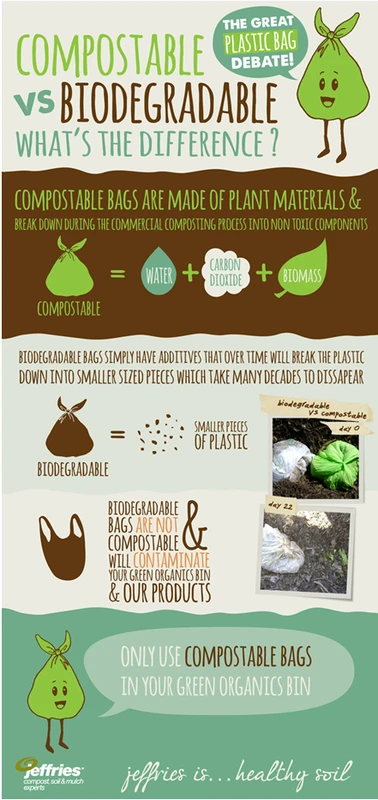
PawVerde.com – Biodegradable bags have gained increasing attention as consumers seek environmentally responsible alternatives to conventional plastic bags. Unlike regular plastic bags, which persist in the environment for centuries, biodegradable variants are designed to break down over months to years. However, not all biodegradable bags are created equal, and distinctions between biodegradable, compostable, and conventional plastic bags bear significant implications for environmental impact and proper disposal. This analysis unpacks these differences, explores the regulatory landscape, and examines practical usage and disposal recommendations based on current scientific understanding and authoritative standards.
Biodegradable bags typically incorporate plant-based polymers such as polylactic acid (PLA) or starch blends, often enhanced with additives to accelerate microbial degradation. These materials contrast sharply with regular plastic bags, which are predominantly made from petrochemical-derived polymers like polyethylene (PE) or polypropylene (PP). While biodegradable bags fragment through microbial activity, their degradation time spans a wide range—commonly six to twenty-four months—depending on environmental conditions such as temperature, moisture, and oxygen availability. Compostable bags represent a subset of biodegradable products engineered to meet stringent standards like EN13432 or AS4736, enabling them to fully metabolize into nutrient-rich compost in industrial composting facilities within prescribed timeframes.
Regular plastic bags resist natural breakdown, persisting as environmental pollutants for hundreds of years and contributing significantly to plastic pollution and microplastic contamination. In contrast, biodegradable bags can reduce such persistence but do not guarantee complete decomposition under landfill conditions, where oxygen is limited and microbial populations may be insufficient. Compostable bags require thermophilic composting environments—typically maintained at 55-60°C—to achieve full degradation, a process not replicable in standard home compost setups. This distinction underscores the importance of understanding disposal pathways to maximize environmental benefits.
The Federal Trade Commission (FTC) enforces the Green Guides, which regulate marketing claims related to biodegradability and compostability to prevent consumer deception. The FTC mandates that claims of biodegradability must be backed by scientific evidence demonstrating complete degradation within a reasonable timeframe under customary disposal conditions. Oxo-degradable plastics, which fragment into microplastics rather than fully mineralizing, have faced increasing regulatory scrutiny and bans, such as South Australia’s Single-use Plastic Act. Certification schemes, including the OK Compost Home, Seedling Logo, and AS5810 standard for home compostability, provide consumers with verified assurances of product claims, helping distinguish truly compostable bags from misleading biodegradable labels.
Usage guidelines emphasize the importance of aligning bag types with appropriate waste streams. Compostable bags are recommended exclusively for organic waste destined for industrial composting facilities, where controlled aerobic conditions enable complete breakdown. Biodegradable bags may be used for general waste but should not be considered a solution for landfill environments due to their limited degradation potential there. Regular plastic bags remain unsuitable for compost or organic waste, as they impede compost quality and contribute to microplastic pollution. Consumers seeking home composting options should look for bags certified under home composting standards, although availability remains limited.
Market trends indicate a growing demand for eco-friendly waste bags, driven by increasing regulatory restrictions on single-use plastics and heightened consumer environmental awareness. Manufacturers like Torise Biomaterials and platforms such as BinBags.com offer customizable biodegradable and compostable options certified to international standards. Innovations in plant-based polymers and biopolymer blends aim to improve performance and reduce environmental footprints, while transparency in certification and labeling remains a critical factor for market growth.
The distinction between biodegradable, compostable, and regular plastic bags hinges on material composition, degradation mechanisms, environmental conditions required for breakdown, and regulatory frameworks. Informed consumer choices, supported by accurate certification and proper disposal infrastructure, are essential for realizing the environmental benefits these products promise. Moving forward, expanding industrial composting capacity and enhancing public understanding of disposal practices will be vital to advancing sustainable waste management.
Material Composition and Manufacturing Differences
Biodegradable bags predominantly consist of plant-based polymers derived from renewable resources such as corn starch, sugarcane, or cellulose. Polylactic acid (PLA) is a common polymer used due to its ability to polymerize from lactic acid sourced via fermentation of plant sugars. These bags often incorporate additives that catalyze microbial degradation by enhancing oxygen permeability or initiating hydrolysis. Variants may also include blends with polybutylene adipate terephthalate (PBAT) to improve flexibility and strength. In contrast, regular plastic bags are formulated primarily from polyethylene (PE) or polypropylene (PP), petrochemical polymers synthesized from fossil fuel derivatives through polymerization processes. These materials are highly durable, chemically inert, and resistant to microbial attack.
Compostable bags differ in that their material composition must comply with certification standards like EN13432 (European) or AS4736 (Australian), ensuring they disintegrate and biodegrade fully under industrial composting conditions within specified timeframes—commonly 90 days. These bags often use certified biopolymers and avoid additives that could hinder microbial breakdown or leave toxic residues. The manufacturing process for compostable bags includes quality controls to verify material purity and performance characteristics that facilitate rapid composting.
Oxo-degradable plastics, once marketed as biodegradable alternatives, are conventional petrochemical plastics embedded with pro-oxidant additives that cause fragmentation under UV exposure or heat. However, these materials do not mineralize completely and instead produce microplastic fragments, posing environmental risks. Due to these concerns, regions like South Australia have legislated bans on oxo-degradable plastics, aligning with global trends toward stricter regulation.
Decomposition Processes and Environmental Impact
biodegradable bags undergo decomposition primarily through microbial enzymatic activity that breaks down polymer chains into smaller molecules such as water, carbon dioxide, and biomass. This process requires adequate oxygen, moisture, and temperature conditions, with degradation times varying significantly based on environmental factors. Laboratory studies indicate that under optimal aerobic conditions, some biodegradable bags can degrade within six months; however, in less favorable environments, degradation may extend beyond two years. Importantly, in anaerobic landfill conditions, biodegradation rates decline sharply, often resulting in persistence comparable to regular plastics.
Regular plastic bags, dominated by polyethylene and polypropylene, resist microbial degradation due to their chemical structure and hydrophobicity. Studies reveal these bags can persist for upwards of 400 years, fragmenting into microplastic particles that contaminate soils, waterways, and marine ecosystems. The environmental burden of these plastics includes physical hazards to wildlife, chemical leaching, and bioaccumulation of toxic additives.
Compostable bags require thermophilic composting environments maintained between 55°C and 60°C, where specialized microorganisms metabolize the polymers efficiently. Certification standards mandate that compostable bags must disintegrate physically and biodegrade by at least 90% within 90 days in industrial composting facilities. These facilities provide controlled conditions not replicable in home composting or landfill sites, making industrial composting infrastructure critical for effective waste management.
Oxo-degradable plastics pose unique environmental risks as their fragmentation into microplastics increases the load of persistent pollutants. Scientific consensus discourages their use, leading to regulatory bans and calls for better alternatives.
Regulatory Standards and Certification
The Federal Trade Commission’s (FTC) Green Guides set forth guidelines to prevent deceptive marketing claims related to environmental benefits of products, including biodegradable and compostable bags. The FTC requires substantiation that such products will fully degrade within a reasonable timeframe under customary disposal conditions. Failure to meet these standards can result in enforcement actions against manufacturers or retailers making unsubstantiated claims.
Certification bodies provide third-party verification to help consumers and waste managers identify legitimate biodegradable and compostable products. The OK Compost certification, managed by TÜV Austria, certifies products for industrial composting (OK Compost Industrial) or home composting conditions (OK Compost Home). The Seedling Logo, issued by the European Bioplastics association, indicates compliance with EN13432 standards. Similarly, Australian standards AS4736 and AS5810 specify requirements for industrial and home compostable bags, respectively. These certifications assess parameters such as biodegradation rate, disintegration, absence of heavy metals, and ecotoxicity.
Regional regulations increasingly mandate the reduction or elimination of single-use plastic bags, including bans on oxo-degradable plastics. South Australia’s Single-use Plastic Act explicitly prohibits oxo-degradable plastic products, reflecting growing legislative recognition of their environmental hazards.
Usage and Disposal Guidelines
Proper disposal of biodegradable and compostable bags is essential to maximize environmental benefits. Compostable bags should be reserved for organic waste streams destined for industrial composting facilities. These facilities maintain the high temperatures and microbial populations necessary for complete decomposition, producing nutrient-rich compost suitable for agricultural and horticultural use.
Biodegradable bags, while more environmentally friendly than conventional plastics, may not decompose effectively in landfill conditions due to oxygen scarcity and lower microbial activity. Therefore, they are better suited for waste streams where aerobic degradation is possible or where waste sorting allows compostable waste diversion.
Regular plastic bags should be avoided for organic waste disposal as they hinder composting processes and contribute to contamination. Consumers are advised to select bags with recognized certifications matching their intended disposal method—home compostable bags for backyard composters, industrial compostable bags for municipal organic waste programs, and conventional plastics only where recycling facilities exist.
Home composting of biodegradable bags remains limited by the lack of certification for many products and the inability of typical home compost setups to reach thermophilic temperatures or maintain consistent moisture levels. Consumers should verify product certifications and local composting infrastructure capabilities before use.
Market Trends and Manufacturer Initiatives
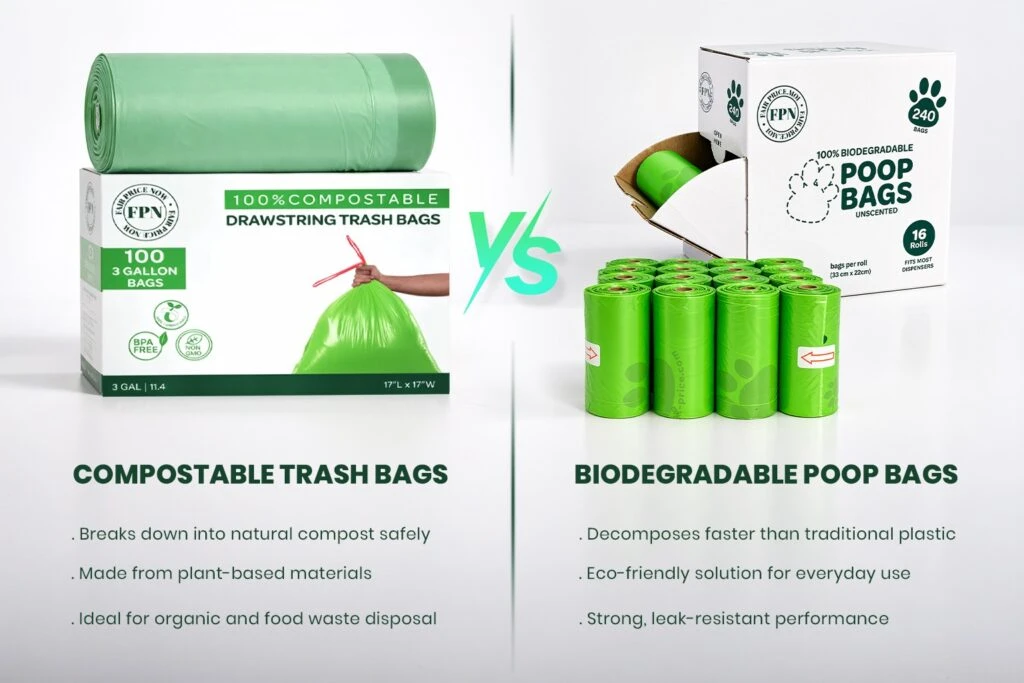
The market for biodegradable and compostable bags has experienced robust growth driven by regulatory pressures, consumer demand for sustainable products, and technological advancements in biopolymer development. Industry leaders such as Torise Biomaterials specialize in producing certified biodegradable and compostable bags utilizing plant-based polymers and advanced additive technologies to enhance performance and compliance.
Retailers like BinBags.com offer customizable eco-friendly waste bags certified to international standards, catering to both commercial and residential consumers. Innovations focus on improving bag strength, shelf life, and degradation profiles while minimizing costs to compete with traditional plastics.
Environmental benefits, including reduced plastic pollution and lower carbon footprints, underpin consumer interest. However, challenges remain in ensuring appropriate infrastructure for industrial composting and public education on proper disposal to prevent contamination of waste streams.
| Bag Type | Material Composition | Degradation Environment | Typical Decomposition Time | Certification Standards |
|---|---|---|---|---|
| Regular Plastic Bags | Polyethylene (PE), Polypropylene (PP) from petrochemicals | Landfill or environment; minimal biodegradation | Centuries (up to 400+ years) | None (non-biodegradable) |
| Biodegradable Bags | Plant-based polymers (PLA, starch blends) with additives | Aerobic, moist environments; variable | 6–24 months (varies with conditions) | Limited; variable certification |
| Compostable Bags | Certified biopolymers designed for composting | Industrial composting facilities (55–60°C) | ≤90 days (per standards) | EN13432, AS4736, OK Compost, Seedling Logo |
| Oxo-Degradable Plastics | Petrochemical plastics with pro-oxidant additives | Fragment under UV/heat; produce microplastics | Fragmentation in months; no full degradation | Banned in some regions (e.g., South Australia) |
FAQ
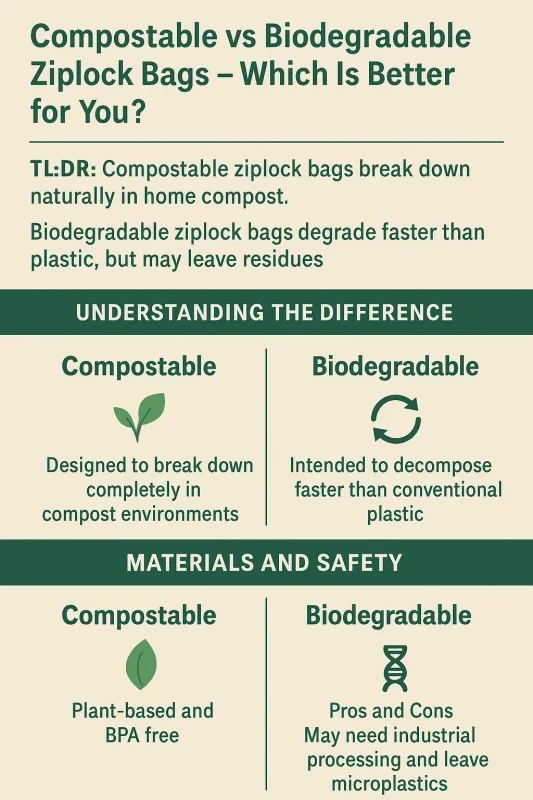
What is the main difference between biodegradable and compostable bags?
Biodegradable bags break down into smaller pieces through microbial activity over months to years but may not fully mineralize, especially in landfills. Compostable bags are engineered to completely degrade into non-toxic compost within a specific timeframe under industrial composting conditions.
Can biodegradable bags decompose in landfill environments?
Generally, no. Landfills are anaerobic with limited oxygen and microbial activity, slowing or preventing biodegradation. Biodegradable bags may persist similarly to conventional plastics if disposed of in landfills.
Are oxo-degradable plastics environmentally safe?
No. Oxo-degradable plastics fragment into microplastics instead of fully degrading, contributing to environmental pollution. Many jurisdictions have banned their use due to these risks.
How can consumers ensure they buy genuinely compostable bags?
Consumers should look for certifications such as OK Compost, Seedling Logo, EN13432, or AS4736 on packaging, indicating compliance with recognized composting standards.
Is home composting suitable for all compostable bags?
No. Only bags certified for home composting (e.g., under AS5810 or OK Compost Home) are suitable for backyard composting. Industrial compostable bags require high-temperature composting not achievable at home.
Biodegradable and compostable bags present promising alternatives to traditional plastic waste bags by offering reduced environmental persistence and pollution. However, their effectiveness depends critically on material composition, degradation environments, and adherence to regulatory standards. Consumers and waste managers must recognize these distinctions to optimize waste disposal practices and support sustainable waste management infrastructure. Expanding industrial composting facilities and improving product transparency will be essential steps toward widespread adoption and environmental benefit.