
Eco-Friendly Pet Supplement Benefits & Greenwashing Guide
PawVerde.com – Eco-friendly pet supplements leverage upcycled ingredients, sustainable sourcing, and biodegradable packaging to reduce the environmental footprint of pet care. By choosing products that utilize food industry byproducts or plant-based alternatives like algal oil, owners can support biodiversity and reduce waste without compromising their pet’s nutritional bioavailability.
The upcycled ingredients market is projected to reach a 32.1% global market share by 2032. This shift reflects a growing demand for pet nutrition that addresses both individual animal health and broader ecological preservation.
The Greenwashing Red Flag Checklist: Verifying Eco-Claims
To avoid greenwashing, look for specific certifications rather than vague terms like ‘natural.’ Verify if ‘upcycled’ refers to actual food industry byproducts, check for clear end-of-life packaging instructions (compostable vs. recyclable), and ensure ‘organic’ claims are backed by regulatory standards rather than just marketing buzzwords.
Decoding ‘Natural’ vs. ‘Organic’
Marketing terminology often obscures actual nutritional value. Dr. Ruth Roberts notes that organic status should be viewed as one quality factor, not the sole deciding criterion. A common failure mode occurs when brands use “natural” to describe products that lack rigorous third-party verification or contain synthetic fillers that undermine the eco-friendly intent.
The Packaging Reality Check
The United States pet food industry produces approximately 300 million pounds of plastic annually. This high volume of waste makes understanding packaging distinctions essential for reducing environmental impact:
- Compostable: Designed to break down in specific environments (often requiring industrial facilities).
- Biodegradable: A broad term that does not always guarantee rapid or safe decomposition.
- Recyclable: Requires specific local infrastructure to prevent the container from ending up in a landfill.
Relying on a label that says “eco-friendly” without providing a specific disposal path is a significant red flag. For example, a “recyclable” plastic bottle is ineffective if the local municipality does not accept that specific polymer grade.
The Sustainability vs. Efficacy Paradox
While plant-based or upcycled ingredients reduce carbon footprints, the primary goal remains delivering active nutrients that the animal can actually utilize. Ecological benefits must be balanced against the physiological requirements of the pet.
When Bioavailability Trumps Eco-Labels
Alchemypet emphasizes the importance of bioavailability in natural remedies, as a highly sustainable ingredient is useless if it passes through the digestive tract without being absorbed. If a supplement lacks the necessary delivery mechanism, it becomes nutritional waste, which is inherently unsustainable.
The Entourage Effect in Plant-Based Formulas
Many eco-conscious brands, such as inClover Natural Pet Supplements, focus on full-spectrum and whole food supplements. These formulations aim to utilize the “entourage effect,” where various compounds like terpenes and flavonoids work synergistically to enhance therapeutic benefits. This approach contrasts with synthetic alternatives that often provide isolated, single-molecule nutrients.
| Nutrient Type | Absorption Efficiency | Environmental Impact | Best Use Case |
|---|---|---|---|
| Natural/Whole Food Vitamins | High (Synergistic) | Lower (if upcycled) | Daily wellness support |
| Synthetic Vitamins | Variable (often lower) | Higher (industrial) | Targeted deficiency correction |
| Chelated Minerals | Very High | Moderate | Mineral absorption optimization |
| Inorganic Mineral Salts | Low | Moderate | Budget-conscious baseline |
As shown in the data, natural and chelated forms often provide superior biological value compared to cheaper synthetic options.
Upcycling: Turning Food Waste into Pet Nutrition
Upcycling involves transforming byproducts or surplus materials from the human food industry into high-value pet supplement actives. This process, utilized by brands like Eggnovo, ensures efficient resource use and significantly reduces the environmental impact of food waste while providing nutrient-dense ingredients like Ovopet®.
How Upcycled Ingredients are Purified
The process of upcycling is not merely about repurposing waste; it requires rigorous purification to ensure safety. Eggnovo, a manufacturer of sustainable pet nutrition using upcycled ingredients, utilizes advanced methods to transform food industry byproducts into high-quality actives. This ensures that ingredients like Ovopet® meet strict safety standards while preventing surplus materials from entering landfills.
The Economic Impact of Upcycling
Consumer sentiment is shifting toward these methods. In France, 68% of consumers recognize the environmental benefits of pet food made from surplus materials. Similarly, 58% of pet food buyers in Poland express interest in products made with ingredients that would otherwise go to waste. This indicates a massive global market opportunity for circular economy models in pet care.
Reducing the Carbon Pawprint: Sourcing and Density
Reducing the “carbon pawprint” involves evaluating supply chain logistics and ingredient concentration. Hill’s Pet notes that sourcing ingredients locally can reduce the emissions caused by transporting materials across large distances.
Local Sourcing vs. Transport Emissions
Long-distance logistics contribute heavily to the greenhouse gas emissions of pet products. Hill’s Pet notes that sourcing ingredients locally can reduce the emissions caused by transporting materials across large distances. By minimizing the mileage between the farm and the manufacturing facility, companies can significantly lower their total carbon output.
The Efficiency of High-Energy-Dense Diets
Density is a hidden factor in sustainability. Royal Canin points out that developing high-energy-dense diets can contribute to lower greenhouse gas emissions per calorie. When a supplement is highly concentrated, less total mass must be produced, packaged, and transported to achieve the same nutritional result, thereby optimizing resource use.
The Bioavailability Advantage of Whole Foods
Nutrient structure directly impacts health outcomes. For example, Dr. Ruth Roberts states that chelated minerals are often better absorbed than inorganic mineral salts because they are bonded to organic molecules.
Chelated Minerals vs. Inorganic Salts
The chemical structure of a mineral dictates how easily an animal’s body can process it. Dr. Ruth Roberts states that chelated minerals are often better absorbed than inorganic mineral salts. Chelated minerals are bonded to organic molecules, making them more compatible with biological pathways, whereas inorganic salts may remain unabsorbed and contribute to environmental waste through excretion.
The Role of Natural Co-factors
Natural vitamins do not exist in isolation. Raw & Fresh notes that the natural RRR form of Vitamin E is absorbed and utilized up to twice as efficiently as its synthetic counterpart. Furthermore, whole food B vitamins offer superior absorption because they are found as a complex with various natural co-factors. This integrated delivery is essential for high bioavailability.
- Natural RRR Form: Optimized for biological recognition.
- Synthetic Counterparts: Often lack the necessary co-factors for efficient uptake.
- Co-factor Synergy: Essential for the metabolic activation of vitamins.
Avoiding Common Supplementation Pitfalls
Improper usage can lead to health issues and increased waste. Even the most eco-friendly supplement can become a liability if used incorrectly.
The Danger of Over-Supplementation
More is not always better. Alchemypet warns that providing more than the required amount of natural ingredients can exacerbate existing health issues. This is particularly true with fat-soluble vitamins or concentrated minerals that can reach toxic levels if the dosage is not carefully managed.
Nutritional Imbalance in ‘Complete’ Diets
A critical error involves adding supplements to “complete” commercial diets. UK Pet Food advises that for a healthy cat or dog, it is not recommended to supplement a ‘complete’ diet, as this can lead to nutritional imbalances. When a pet receives excess nutrients, the body must work harder to process or excrete them, which is both biologically taxing and environmentally inefficient.
Practical Sustainability: The Refill Revolution
Addressing the sheer volume of waste in the industry is a primary goal for modern pet brands. The United States pet food industry produces approximately 300 million pounds of plastic annually, highlighting the urgent need for alternative delivery models.
Shortcut: To reduce plastic waste, search for “Eco-Refill” or “Refill Pouch” options on pet wellness websites rather than purchasing new primary containers every month.
Transitioning to a Refill Model
Refill models allow consumers to keep their high-quality original containers while only purchasing the replenishment product in lightweight, minimal packaging. For example, Woof Creek Pet Wellness offers various refill options. A Gut Health Support supplement refill pouch is available for a sale price of $37.00 (down from a regular price of $38.00). Similarly, their Flea + Tick Defense Eco-Refill Pouch can be found for $33.00 (regularly $34.00), providing a cost-effective and environmentally conscious way to maintain pet wellness.
Veterinary Verification: A Guide for Owners
The role of the veterinarian is expanding into the realm of environmental health. According to the Royal Canin Academy, veterinarians are in a unique position to influence their clients and the broader community in matters related to climate change and sustainability. Owners should ask their veterinary professionals about the environmental impact of specific ingredient sources, such as comparing the carbon footprint of algal oil versus traditional fish oil.
FAQ
Is it necessary to supplement a pet on a complete diet?
According to UK Pet Food, for a healthy cat or dog, it is not recommended to supplement a ‘complete’ diet as it may lead to nutritional imbalances. Over-supplementing can interfere with the carefully balanced nutrient ratios designed for your pet’s species.
What is the ‘entourage effect’ in pet supplements?
The entourage effect refers to the synergistic interaction of compounds like cannabinoids, terpenes, and flavonoids in full-spectrum supplements. This phenomenon enhances the therapeutic benefits of each individual component, providing a more holistic effect than isolated synthetic ingredients.
How can I tell if a pet supplement is truly eco-friendly?
Verify claims by looking for evidence of upcycled ingredients, such as Ovopet®, or local sourcing practices. You should also check for refillable packaging models, like those offered by Woof Creek Pet Wellness, to ensure the product aligns with sustainable waste reduction goals.
Nestlé Purina & Greiner Lead 2026 Shift to Recyclable Pet Packaging
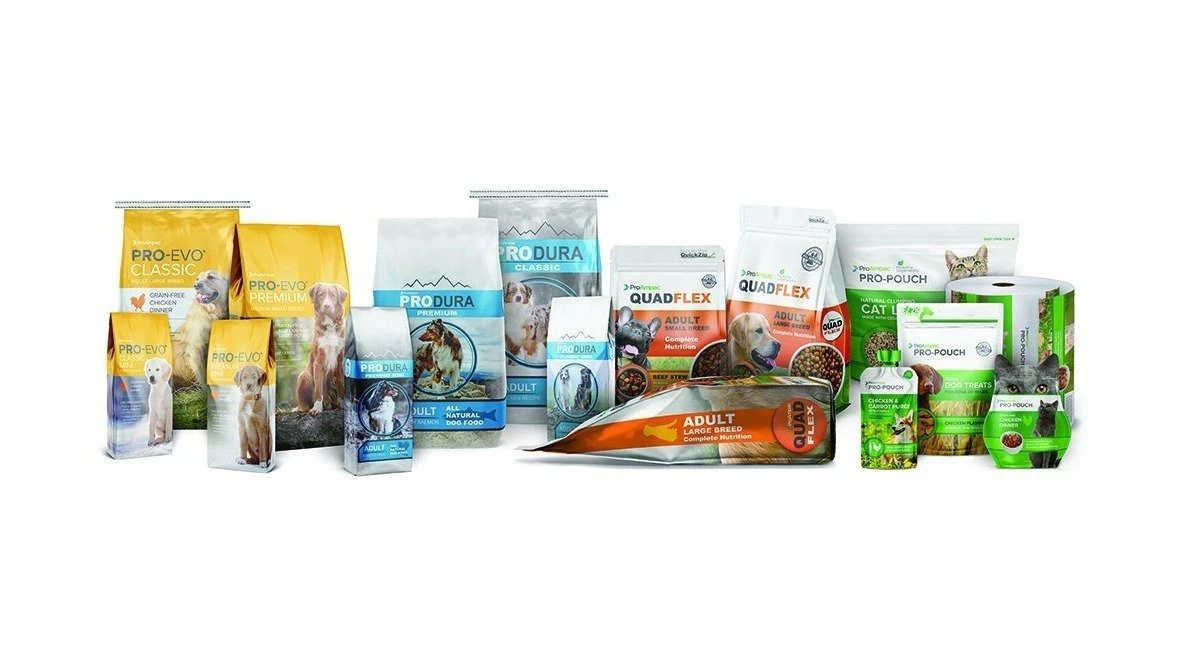
PawVerde.com – Pet product packaging in 2026 is rapidly evolving with a strong shift toward mono-material recyclable solutions, biodegradable and compostable alternatives, and refillable systems. Industry leaders including Nestlé Purina, Greiner Packaging, and Weruva are spearheading innovations that improve recyclability and reduce environmental impact, driven by tighter regulations such as the US Extended Producer Responsibility (EPR) framework and growing consumer demand for sustainable pet care products. Chemical recycling of PET is expanding at an annual growth rate of 8-10%, complementing mechanical recycling to enable food-grade material recovery and circularity.
Mono-material packaging has emerged as the dominant trend in recyclable pet product packaging due to its simplified material composition that facilitates more efficient recycling. Greiner Packaging, for instance, has introduced dry pet food cups and lids made entirely from polypropylene, eliminating multilayer films that complicate sorting and processing. Nestlé Purina’s rollout of recyclable treat packaging and Saga Nutrition’s recyclable dry food bags further demonstrate the industry’s commitment to mono-material formats. Innovations extend to wet food packaging, where rPET trays combined with Coveris’s MonoFlex metallised polyethylene bags offer barrier performance while maintaining recyclability and compliance with emerging PFAS-free mandates. These solutions help brands meet regulatory requirements while responding to consumer preferences for transparency and sustainability.
Biodegradable and compostable packaging alternatives are gaining traction as secondary packaging and pouches for treats. Materials derived from mycelium, bamboo, and plant starches are being applied to create compostable outer cartons and flexible pouches certified under ASTM D6400 standards. These materials break down in industrial composting conditions, offering an end-of-life solution that reduces landfill waste. While still limited in application compared to mono-material packaging, biodegradable options address a niche in sustainable packaging where recyclability alone does not suffice. The American Association of Feed Control Officials (AAFCO) has begun exploring guidelines for such materials in pet food packaging, signaling regulatory interest in expanding sustainable packaging standards.
Advances in PET recycling technologies are critical to closing the loop on pet product packaging. Mechanical recycling, the conventional process, faces challenges with multilayer films and contamination, limiting the percentage of post-consumer recycled (PCR) content in food-grade PET. Chemical recycling is expanding rapidly, growing at 8-10% annually worldwide, as it enables depolymerization of PET waste into monomers that can be repolymerized into virgin-quality PET. Companies like Bobine, a division of Saint-Gobain, are investing in chemical recycling innovations that enhance purity and scalability for packaging applications. This technological progress is essential for meeting ambitious PCR content targets set by packaging manufacturers and brands aiming for carbon footprint reductions and circular economy goals.
The regulatory landscape is a major driver shaping pet product packaging redesigns. The US Extended Producer Responsibility (EPR) laws effective this year impose legal obligations on pet product manufacturers to manage packaging waste, incentivizing the shift to recyclable and reduced-plastic formats. Similarly, the European Packaging and Packaging Waste Regulation (PPWR) mandates higher recyclability thresholds and limits on hazardous substances, impacting design and material choices globally. Industry players such as Printpack have aligned their sustainability targets with the Science Based Targets initiative (SBTi), committing to measurable reductions in carbon emissions and increased use of recycled content. These frameworks compel brands to integrate sustainability into packaging R&D, supply chain practices, and communication strategies.
Circular economy initiatives are becoming embedded in pet product packaging strategies. Weruva’s Werucycle program has recycled nearly 300,000 pieces of pet food packaging into new plastic products, demonstrating effective waste diversion and material reuse. West Paw’s “Join the Loop” program focuses on infinite recyclability for pet toys and beds, offering a closed-loop system that reduces landfill contributions. Additionally, refillable and reusable container systems are gaining attention as zero-waste solutions, allowing consumers to reduce single-use packaging by refilling pet food and treat containers at retail or home. These programs not only contribute to environmental goals but also engage consumers seeking responsible pet care options.
Consumer trends strongly support the shift toward sustainable pet packaging. Surveys indicate that 67% of pet owners aged 18–34 prefer brands with environmentally responsible practices, reflecting the influence of Millennials and Gen Z demographics who prioritize ethical sourcing, transparency, and clear packaging claims. This demand is fueling product launches with explicit sustainability messaging and certifications, driving innovation in packaging design and material sourcing. The rise of eco-conscious consumers is also influencing retailers to stock more sustainable pet care products, creating market incentives for brands to invest in recyclable and biodegradable packaging solutions.
Sustainable packaging also offers tangible environmental and logistical advantages. Lightweight mono-material bags, such as Coveris MonoFlexE Opti, reduce material use and comply with PFAS-free mandates, significantly lowering carbon emissions related to transport and manufacturing. Material reduction not only cuts CO₂ footprints but also optimizes supply chain efficiency by decreasing packaging weight and volume. These benefits translate into cost savings and potential tax advantages under packaging-related environmental policies, reinforcing the business case for sustainable packaging adoption.
| Packaging Type | Material Example | Key Features | Brand/Company | Regulatory Compliance |
|---|---|---|---|---|
| Mono-Material Rigid Packaging | Polypropylene (PP) | Fully recyclable, simplifies sorting | Greiner Packaging (dry food cups) | US EPR, PPWR |
| Mono-Material Flexible Packaging | Metallised PE (MonoFlex) | Lightweight, barrier properties, recyclable | Coveris | PFAS-free mandates, EPR |
| Biodegradable Secondary Packaging | Mycelium, Bamboo-based cartons | Industrial compostable, ASTM D6400 certified | Various emerging suppliers | ASTM D6400, AAFCO guidelines |
| Recycled PET (rPET) Trays | Post-consumer recycled PET | Food-grade, supports circular economy | Bobine (Saint-Gobain) | SBTi targets, EPR |
| Refillable Containers | Durable plastic or glass | Zero waste, reusable | West Paw (“Join the Loop” program) | EPR incentivized |
The pet product packaging sector in 2026 is clearly aligned with broader sustainability and circular economy objectives, blending material innovation, regulatory compliance, and consumer engagement. As chemical recycling technology matures and EPR regulations tighten, brands are expected to accelerate adoption of mono-material and biodegradable packaging formats while expanding circular initiatives such as refillable systems and take-back programs. This trajectory promises to reduce environmental impact significantly and reshape the pet care market landscape toward responsible and transparent packaging solutions.