

Eco-Friendly Pet Waste Bags: How to Avoid Greenwashing
PawVerde.com – To lower your carbon footprint effectively, choose pet waste bags with high recycled or biobased content. While compostable bags are preferable to traditional plastics—which take decades to decompose—their environmental benefit depends entirely on proper disposal in a composting facility rather than a landfill.
Using bags with high recycled or biobased content is cited by the Plastics Industry Association as the simplest way for consumers to lower their carbon footprint.
How to Spot Greenwashing: A Certification Checklist
To avoid greenwashing, look for legitimate third-party certifications like TUV Austria or BPI rather than vague ‘biodegradable’ claims. Truly compostable bags should be made from plant-based materials like corn starch (PBAT) and specifically meet standards like EN13432 to ensure they break down in industrial composting environments.
The ‘Biodegradable’ Trap
The term “biodegradable” does not necessarily mean a product decomposes quickly or in an environmentally friendly way. According to research regarding composting reactors, some biodegradable plastics can even be derived from fossil sources. This lack of specificity often constitutes greenwashing.
A major failure mode occurs when consumers assume a “bio-based” label implies the product will vanish in a backyard pile. In reality, many of these materials are designed for high-heat environments. If these bags end up in a standard trash bin, they fail to provide any meaningful environmental relief.
Key Certifications to Trust
Reliable environmental claims are backed by rigorous testing from recognized bodies. When evaluating your next purchase, look for these specific indicators:
- TUV Austria Certification: This verifies specific compostability standards, such as those met by Wooflinen compostable bags, which are made from corn starch (PBAT) with zero plastics.
- BPI (Biodegradable Products Institute): A standard for industrial compostability in North America.
- EN13432: The European standard for packaging recoverable through composting and biodegradation.
Consumers should check the packaging for these exact terms. If a brand only uses the word “eco-friendly” without a specific certification or a breakdown of the percentage of plant-based material, it is a red flag. For instance, PET N PET Dog Poop Bags are transparent about their composition, noting a minimum of 38% plant-based content.
The Landfill Paradox: Why ‘Eco-Friendly’ Bags Fail in the Trash
A significant contradiction exists in waste management: compostable bags in a properly managed landfill may take nearly as long to degrade as polyethylene bags. Because landfills are designed to be anaerobic and contained to prevent gas escape, the biological processes required for decomposition are stifled. This means the environmental advantage of a compostable material is essentially neutralized if it is not diverted to a specialized facility.
Even when bags are compostable, most people still toss them in the trash. Paul Cannella, founder and president of The Original Poop Bags, notes that this behavior is a common occurrence. This creates a cycle where “green” products contribute to the same long-term waste issues as traditional plastics.
Warning: Placing compostable bags in a standard landfill does not guarantee they will break down quickly. In many cases, they will persist in the waste stream for years, similar to conventional plastic.
Material Science: Corn Starch vs. Post-Consumer Recycled Plastic
The chemical makeup of a bag determines its environmental impact. Consumers must distinguish between recycled plastic and plant-based polymers to understand how a product will behave at the end of its life.
The Case for 100% Recycled Content
For users who do not have access to industrial composting, recycled plastic is often the most practical choice. Only Natural Pet Unscented Dog Poop Bags contain 100% recycled postconsumer plastic. This approach supports the existing recycling infrastructure by repurposing plastic that has already been produced, rather than creating new polymers.
The Rise of PBAT and Corn Starch
On the other end of the spectrum are plant-based options. While these are designed to disappear, they are chemically complex. Expert commentator Emily Bryson notes that “a lot of these compostable plastics have a polymer that is fossil based or petrochemical based.” This means that even a bag labeled as compostable might still rely on traditional petroleum derivatives to achieve the necessary flexibility and strength.
| Bag Type | Primary Material | Best Disposal Method | Key Advantage |
|---|---|---|---|
| 100% Recycled Plastic | Post-consumer plastic | Standard trash/recycling stream | Supports existing plastic infrastructure |
| Plant-Based (38%) | Mixed plant/synthetic | Industrial composting | Reduces virgin plastic use |
| Zero-Plastic Corn Starch | PBAT / Corn Starch | Industrial composting | Total decomposition (zero plastic) |
The table above illustrates the trade-offs between material origin and disposal requirements. Choosing the right bag requires matching the material to your local waste capabilities.
Durability Stress Test: Will the Bag Hold Up?
An eco-friendly bag is useless if it breaks during a walk. Material composition significantly impacts how a bag handles the physical stress of collecting waste, especially in varying weather conditions or on rough terrain.
Testing reveals that thickness and polymer type are the primary drivers of reliability. For example, Wooflinen bags feature a thickness of 0.71 mil, which provides a specific level of structural integrity for their 9″ x 13″ dimensions. However, different materials fail in different ways:
- While sturdy, these ripped more easily and developed larger holes when scraped against hard surfaces like sidewalks.
- The Apartment Dweller’s Dilemma
For those living in high-density urban areas, municipal composting is often non-existent. Most municipal composting programs in the US do not accept pet waste because it can contain pathogens as well as the residues from antiparasitic medications. In this scenario, an apartment dweller is often limited to the standard trash bin. For these users, a bag with 100% recycled post-consumer plastic is often the most responsible choice, as it utilizes existing waste streams without the false promise of compostability.
Backyard Composting Realities
Suburban homeowners may consider home composting, but this requires caution. Because home environments lack the consistent, high-temperature heat of industrial reactors, “home compostable” bags may take several years to break down. A more effective local option is to build a poop digester.
Sustainable waste management requires both product choice and civic action. Rose Seemann, co-founder of the Enviro Pet Waste Network, suggests that advocacy is key. Forming a dedicated coalition of dog park friends to attend city council meetings and request composting solutions for pet waste can drive long-term systemic change.
FAQ
Most US municipal programs reject pet waste due to potential pathogens and residues from antiparasitic medications found in the waste. These contaminants can compromise the safety of the final compost used in agriculture or gardening.
Tags: biobased materials, BPI certification, compostable pet products, environmental impact, greenwashing, PBAT, pet waste bags, pet waste disposal, sustainable pet care, TUV Austria
Difference Between Biodegradable and Regular Bags Explained
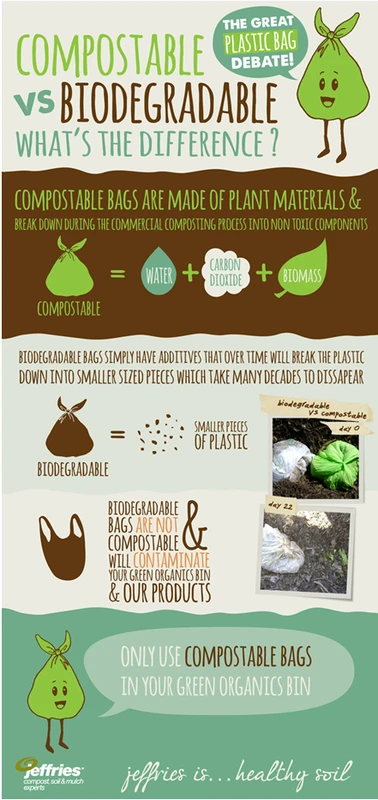
PawVerde.com – Biodegradable bags have gained increasing attention as consumers seek environmentally responsible alternatives to conventional plastic bags. Unlike regular plastic bags, which persist in the environment for centuries, biodegradable variants are designed to break down over months to years. However, not all biodegradable bags are created equal, and distinctions between biodegradable, compostable, and conventional plastic bags bear significant implications for environmental impact and proper disposal. This analysis unpacks these differences, explores the regulatory landscape, and examines practical usage and disposal recommendations based on current scientific understanding and authoritative standards.
Biodegradable bags typically incorporate plant-based polymers such as polylactic acid (PLA) or starch blends, often enhanced with additives to accelerate microbial degradation. These materials contrast sharply with regular plastic bags, which are predominantly made from petrochemical-derived polymers like polyethylene (PE) or polypropylene (PP). While biodegradable bags fragment through microbial activity, their degradation time spans a wide range—commonly six to twenty-four months—depending on environmental conditions such as temperature, moisture, and oxygen availability. Compostable bags represent a subset of biodegradable products engineered to meet stringent standards like EN13432 or AS4736, enabling them to fully metabolize into nutrient-rich compost in industrial composting facilities within prescribed timeframes.
Regular plastic bags resist natural breakdown, persisting as environmental pollutants for hundreds of years and contributing significantly to plastic pollution and microplastic contamination. In contrast, biodegradable bags can reduce such persistence but do not guarantee complete decomposition under landfill conditions, where oxygen is limited and microbial populations may be insufficient. Compostable bags require thermophilic composting environments—typically maintained at 55-60°C—to achieve full degradation, a process not replicable in standard home compost setups. This distinction underscores the importance of understanding disposal pathways to maximize environmental benefits.
The Federal Trade Commission (FTC) enforces the Green Guides, which regulate marketing claims related to biodegradability and compostability to prevent consumer deception. The FTC mandates that claims of biodegradability must be backed by scientific evidence demonstrating complete degradation within a reasonable timeframe under customary disposal conditions. Oxo-degradable plastics, which fragment into microplastics rather than fully mineralizing, have faced increasing regulatory scrutiny and bans, such as South Australia’s Single-use Plastic Act. Certification schemes, including the OK Compost Home, Seedling Logo, and AS5810 standard for home compostability, provide consumers with verified assurances of product claims, helping distinguish truly compostable bags from misleading biodegradable labels.
Usage guidelines emphasize the importance of aligning bag types with appropriate waste streams. Compostable bags are recommended exclusively for organic waste destined for industrial composting facilities, where controlled aerobic conditions enable complete breakdown. Biodegradable bags may be used for general waste but should not be considered a solution for landfill environments due to their limited degradation potential there. Regular plastic bags remain unsuitable for compost or organic waste, as they impede compost quality and contribute to microplastic pollution. Consumers seeking home composting options should look for bags certified under home composting standards, although availability remains limited.
Market trends indicate a growing demand for eco-friendly waste bags, driven by increasing regulatory restrictions on single-use plastics and heightened consumer environmental awareness. Manufacturers like Torise Biomaterials and platforms such as BinBags.com offer customizable biodegradable and compostable options certified to international standards. Innovations in plant-based polymers and biopolymer blends aim to improve performance and reduce environmental footprints, while transparency in certification and labeling remains a critical factor for market growth.
The distinction between biodegradable, compostable, and regular plastic bags hinges on material composition, degradation mechanisms, environmental conditions required for breakdown, and regulatory frameworks. Informed consumer choices, supported by accurate certification and proper disposal infrastructure, are essential for realizing the environmental benefits these products promise. Moving forward, expanding industrial composting capacity and enhancing public understanding of disposal practices will be vital to advancing sustainable waste management.
Material Composition and Manufacturing Differences
Biodegradable bags predominantly consist of plant-based polymers derived from renewable resources such as corn starch, sugarcane, or cellulose. Polylactic acid (PLA) is a common polymer used due to its ability to polymerize from lactic acid sourced via fermentation of plant sugars. These bags often incorporate additives that catalyze microbial degradation by enhancing oxygen permeability or initiating hydrolysis. Variants may also include blends with polybutylene adipate terephthalate (PBAT) to improve flexibility and strength. In contrast, regular plastic bags are formulated primarily from polyethylene (PE) or polypropylene (PP), petrochemical polymers synthesized from fossil fuel derivatives through polymerization processes. These materials are highly durable, chemically inert, and resistant to microbial attack.
Compostable bags differ in that their material composition must comply with certification standards like EN13432 (European) or AS4736 (Australian), ensuring they disintegrate and biodegrade fully under industrial composting conditions within specified timeframes—commonly 90 days. These bags often use certified biopolymers and avoid additives that could hinder microbial breakdown or leave toxic residues. The manufacturing process for compostable bags includes quality controls to verify material purity and performance characteristics that facilitate rapid composting.
Oxo-degradable plastics, once marketed as biodegradable alternatives, are conventional petrochemical plastics embedded with pro-oxidant additives that cause fragmentation under UV exposure or heat. However, these materials do not mineralize completely and instead produce microplastic fragments, posing environmental risks. Due to these concerns, regions like South Australia have legislated bans on oxo-degradable plastics, aligning with global trends toward stricter regulation.
Decomposition Processes and Environmental Impact
biodegradable bags undergo decomposition primarily through microbial enzymatic activity that breaks down polymer chains into smaller molecules such as water, carbon dioxide, and biomass. This process requires adequate oxygen, moisture, and temperature conditions, with degradation times varying significantly based on environmental factors. Laboratory studies indicate that under optimal aerobic conditions, some biodegradable bags can degrade within six months; however, in less favorable environments, degradation may extend beyond two years. Importantly, in anaerobic landfill conditions, biodegradation rates decline sharply, often resulting in persistence comparable to regular plastics.
Regular plastic bags, dominated by polyethylene and polypropylene, resist microbial degradation due to their chemical structure and hydrophobicity. Studies reveal these bags can persist for upwards of 400 years, fragmenting into microplastic particles that contaminate soils, waterways, and marine ecosystems. The environmental burden of these plastics includes physical hazards to wildlife, chemical leaching, and bioaccumulation of toxic additives.
Compostable bags require thermophilic composting environments maintained between 55°C and 60°C, where specialized microorganisms metabolize the polymers efficiently. Certification standards mandate that compostable bags must disintegrate physically and biodegrade by at least 90% within 90 days in industrial composting facilities. These facilities provide controlled conditions not replicable in home composting or landfill sites, making industrial composting infrastructure critical for effective waste management.
Oxo-degradable plastics pose unique environmental risks as their fragmentation into microplastics increases the load of persistent pollutants. Scientific consensus discourages their use, leading to regulatory bans and calls for better alternatives.
Regulatory Standards and Certification
The Federal Trade Commission’s (FTC) Green Guides set forth guidelines to prevent deceptive marketing claims related to environmental benefits of products, including biodegradable and compostable bags. The FTC requires substantiation that such products will fully degrade within a reasonable timeframe under customary disposal conditions. Failure to meet these standards can result in enforcement actions against manufacturers or retailers making unsubstantiated claims.
Certification bodies provide third-party verification to help consumers and waste managers identify legitimate biodegradable and compostable products. The OK Compost certification, managed by TÜV Austria, certifies products for industrial composting (OK Compost Industrial) or home composting conditions (OK Compost Home). The Seedling Logo, issued by the European Bioplastics association, indicates compliance with EN13432 standards. Similarly, Australian standards AS4736 and AS5810 specify requirements for industrial and home compostable bags, respectively. These certifications assess parameters such as biodegradation rate, disintegration, absence of heavy metals, and ecotoxicity.
Regional regulations increasingly mandate the reduction or elimination of single-use plastic bags, including bans on oxo-degradable plastics. South Australia’s Single-use Plastic Act explicitly prohibits oxo-degradable plastic products, reflecting growing legislative recognition of their environmental hazards.
Usage and Disposal Guidelines
Proper disposal of biodegradable and compostable bags is essential to maximize environmental benefits. Compostable bags should be reserved for organic waste streams destined for industrial composting facilities. These facilities maintain the high temperatures and microbial populations necessary for complete decomposition, producing nutrient-rich compost suitable for agricultural and horticultural use.
Biodegradable bags, while more environmentally friendly than conventional plastics, may not decompose effectively in landfill conditions due to oxygen scarcity and lower microbial activity. Therefore, they are better suited for waste streams where aerobic degradation is possible or where waste sorting allows compostable waste diversion.
Regular plastic bags should be avoided for organic waste disposal as they hinder composting processes and contribute to contamination. Consumers are advised to select bags with recognized certifications matching their intended disposal method—home compostable bags for backyard composters, industrial compostable bags for municipal organic waste programs, and conventional plastics only where recycling facilities exist.
Home composting of biodegradable bags remains limited by the lack of certification for many products and the inability of typical home compost setups to reach thermophilic temperatures or maintain consistent moisture levels. Consumers should verify product certifications and local composting infrastructure capabilities before use.
Market Trends and Manufacturer Initiatives
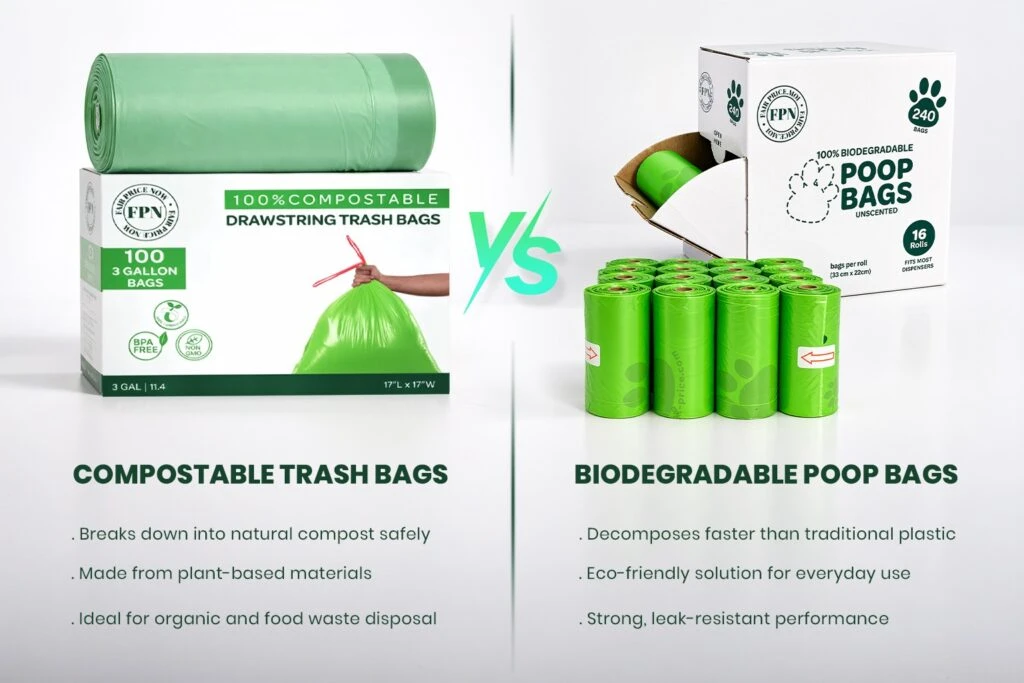
The market for biodegradable and compostable bags has experienced robust growth driven by regulatory pressures, consumer demand for sustainable products, and technological advancements in biopolymer development. Industry leaders such as Torise Biomaterials specialize in producing certified biodegradable and compostable bags utilizing plant-based polymers and advanced additive technologies to enhance performance and compliance.
Retailers like BinBags.com offer customizable eco-friendly waste bags certified to international standards, catering to both commercial and residential consumers. Innovations focus on improving bag strength, shelf life, and degradation profiles while minimizing costs to compete with traditional plastics.
Environmental benefits, including reduced plastic pollution and lower carbon footprints, underpin consumer interest. However, challenges remain in ensuring appropriate infrastructure for industrial composting and public education on proper disposal to prevent contamination of waste streams.
| Bag Type | Material Composition | Degradation Environment | Typical Decomposition Time | Certification Standards |
|---|---|---|---|---|
| Regular Plastic Bags | Polyethylene (PE), Polypropylene (PP) from petrochemicals | Landfill or environment; minimal biodegradation | Centuries (up to 400+ years) | None (non-biodegradable) |
| Biodegradable Bags | Plant-based polymers (PLA, starch blends) with additives | Aerobic, moist environments; variable | 6–24 months (varies with conditions) | Limited; variable certification |
| Compostable Bags | Certified biopolymers designed for composting | Industrial composting facilities (55–60°C) | ≤90 days (per standards) | EN13432, AS4736, OK Compost, Seedling Logo |
| Oxo-Degradable Plastics | Petrochemical plastics with pro-oxidant additives | Fragment under UV/heat; produce microplastics | Fragmentation in months; no full degradation | Banned in some regions (e.g., South Australia) |
FAQ
What is the main difference between biodegradable and compostable bags?
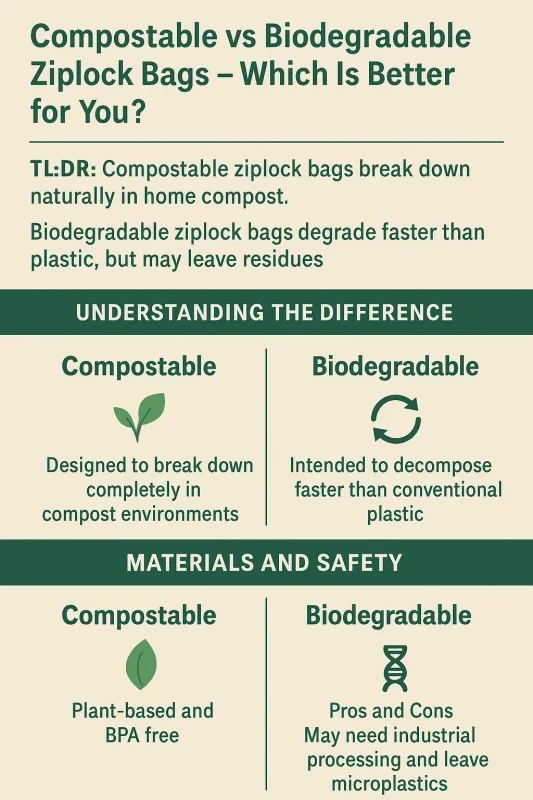
Biodegradable bags break down into smaller pieces through microbial activity over months to years but may not fully mineralize, especially in landfills. Compostable bags are engineered to completely degrade into non-toxic compost within a specific timeframe under industrial composting conditions.
Can biodegradable bags decompose in landfill environments?
Generally, no. Landfills are anaerobic with limited oxygen and microbial activity, slowing or preventing biodegradation. Biodegradable bags may persist similarly to conventional plastics if disposed of in landfills.
Are oxo-degradable plastics environmentally safe?
No. Oxo-degradable plastics fragment into microplastics instead of fully degrading, contributing to environmental pollution. Many jurisdictions have banned their use due to these risks.
How can consumers ensure they buy genuinely compostable bags?
Consumers should look for certifications such as OK Compost, Seedling Logo, EN13432, or AS4736 on packaging, indicating compliance with recognized composting standards.
Is home composting suitable for all compostable bags?
No. Only bags certified for home composting (e.g., under AS5810 or OK Compost Home) are suitable for backyard composting. Industrial compostable bags require high-temperature composting not achievable at home.
Biodegradable and compostable bags present promising alternatives to traditional plastic waste bags by offering reduced environmental persistence and pollution. However, their effectiveness depends critically on material composition, degradation environments, and adherence to regulatory standards. Consumers and waste managers must recognize these distinctions to optimize waste disposal practices and support sustainable waste management infrastructure. Expanding industrial composting facilities and improving product transparency will be essential steps toward widespread adoption and environmental benefit.

What Is Sustainable Sourcing in Pet Food? Key Benefits Explained
PawVerde.com – Sustainable sourcing in pet food entails procuring ingredients that minimize environmental impact, uphold social equity, and ensure economic viability. This practice typically involves using nutrient-rich by-products from the human food chain, sourcing locally to reduce carbon emissions, and supporting ethical labor standards and local economies. As the global pet food market expands, addressing environmental concerns and social responsibilities through sustainable ingredient sourcing has become critical to balancing pet nutrition with ecological and community well-being.
Pet food manufacturers increasingly integrate sustainable sourcing principles to reduce ecosystem damage while maintaining consistent product quality. Most pet food ingredients are derived from animal by-products such as organ meats and trimmings that would otherwise go to waste, effectively reducing food loss and the need for raising animals solely for pet food. Local sourcing strengthens supply chain resilience by shortening transport distances, thereby cutting greenhouse gas emissions and supporting small and medium-sized farms. Additionally, many companies adopt renewable energy and energy-efficient manufacturing to lower the carbon footprint of production processes.
Environmental Aspects of Sustainable Sourcing in Pet Food
Minimizing environmental harm through sustainable sourcing begins with reducing biodiversity loss and ecosystem degradation linked to conventional livestock farming. pet food ingredients sourced as by-products from animals already processed for human consumption prevent additional animal farming dedicated to pet food production. According to data from the Pet Food Institute (PFI), up to 90% of animal-based pet food ingredients are such by-products, demonstrating significant potential to cut resource use and waste.
Local ingredient sourcing is another environmental pillar, as it reduces transportation-related carbon emissions and fosters regional agricultural sustainability. For example, Ancestral Pet Food emphasizes sourcing from UK-based farms practicing regenerative agriculture, which enhances soil health and carbon sequestration. This approach not only lowers the environmental footprint but also helps preserve local ecosystems.
Manufacturers are also investing in renewable energy sources like solar and wind to power pet food production facilities. Hill’s Pet Nutrition recently reported a 25% reduction in carbon emissions through energy-efficient upgrades and solar panel installations at several plants. Such measures contribute to reducing the overall environmental impact of pet food manufacturing beyond ingredient sourcing alone.
By-products utilization plays a central role in waste reduction. Rather than discarding organ meats, trimmings, and other animal parts unsuitable for human consumption, these are repurposed into nutritious pet food ingredients. This practice aligns with circular economy principles, closing the loop on food waste and improving resource efficiency. Brands like Earth Animal incorporate high-quality by-products while maintaining nutritional integrity, ensuring pets receive balanced diets without exacerbating environmental harm.
Social Equity and Ethical Considerations in Sustainable Pet Food
sustainable sourcing in pet food extends beyond environmental concerns to include social equity and ethical labor practices. Fair labor standards in ingredient harvesting and processing are essential to prevent exploitative conditions such as child labor, unfair wages, or unsafe working environments. The UK Pet Food (UKPF) association actively promotes supplier audits to ensure compliance with ethical labor regulations across the supply chain.
Supporting local communities through ethical sourcing strengthens regional economies and enhances social sustainability. By partnering with small-scale farmers and cooperatives, manufacturers contribute to livelihood improvement and economic resilience. For instance, Pure Luxe Pet Food sources ingredients from family-run farms committed to fair wages and sustainable farming, thereby fostering social responsibility alongside environmental stewardship.
Transparency about labor conditions and sourcing origins is increasingly demanded by conscious consumers. Social equity initiatives within the pet food industry often include traceability programs that verify suppliers’ adherence to ethical standards. Companies like Marlen have implemented blockchain-based ingredient tracking to enhance supply chain transparency and accountability, reassuring consumers about the social impact of their purchases.
Ethical sourcing also involves avoiding ingredients linked to deforestation or habitat destruction. The Pet Food Institute supports sustainable certification programs that verify ingredient origins and labor practices, ensuring that pet food production does not perpetuate social or environmental injustices.
Economic Viability and Supply Chain Resilience
Balancing sustainability with economic viability presents a significant challenge for pet food manufacturers. Scalability of sustainable sourcing practices must keep pace with growing pet populations and demand for premium products. This requires resilient supply chains capable of providing consistent ingredient quality and availability without compromising environmental or social standards.
Technology plays a pivotal role in enhancing supply chain resilience. Procurement software and commodity sourcing platforms allow manufacturers to identify sustainable suppliers, track ingredient origins, and optimize purchasing decisions based on sustainability criteria. PSC and Ocatra are among industry players offering tools that integrate sustainability metrics into sourcing strategies.
Economic viability also depends on cost management. While sustainable ingredients may carry higher upfront costs, long-term benefits include reduced waste, lower energy consumption, and stronger brand loyalty among ethically minded consumers. Sustainable sourcing can mitigate risks associated with supply disruptions caused by climate change or geopolitical instability by diversifying supplier bases and emphasizing local procurement.
Investment in supplier development and partnerships with local farms enhances supply chain stability. Ancestral Pet Food’s commitment to working closely with UK farms has resulted in reliable ingredient flows and mutual economic benefits, demonstrating that sustainability and profitability are not mutually exclusive.
Common Sustainable Ingredients and Practices in Pet Food
High-quality by-products constitute a substantial portion of sustainable pet food ingredients. Organ meats, trimmings, and other animal parts not used for human consumption provide essential nutrients such as vitamins, amino acids, and minerals. These by-products reduce waste and resource use by repurposing materials already produced in the human food supply chain.
Alternative protein sources are gaining traction as sustainable options. Insect protein, cultured meat, and plant-based proteins offer reduced environmental footprints compared to traditional livestock. Brands like Earth Animal have begun integrating insect-based proteins validated for nutritional adequacy and sustainability, signaling a shift toward diversified ingredient portfolios.
Regenerative agriculture practices also contribute to sustainable pet food sourcing by enhancing soil fertility, promoting biodiversity, and sequestering carbon. Farms supplying ingredients under this model employ crop rotation, cover cropping, and reduced chemical inputs to improve ecosystem health. These methods align with broader environmental goals and support long-term ingredient availability.
Case studies illustrate these principles in action. Ancestral Pet Food sources all protein ingredients from local farms practicing sustainable and regenerative methods. This approach ensures freshness, traceability, and environmental stewardship. Hill’s Pet Nutrition’s comprehensive sustainability report highlights initiatives including by-product utilization, renewable energy adoption, and supplier engagement to foster ethical labor practices.
Industry Standards and Future Directions
Sustainability frameworks and blueprints are increasingly shaping pet food industry standards. The Pet Sustainability Coalition (PSC) offers guidelines and best practices for sustainable ingredient sourcing, energy use, and social responsibility. Earth Animal’s sustainability blueprint emphasizes transparency, ingredient traceability, and continuous environmental impact assessment.
Traceability is a growing focus, with blockchain and digital tracking technologies enabling detailed supply chain visibility. This supports consumer demands for transparency and helps manufacturers verify compliance with sustainability certifications such as Organic, Fair Trade, and Non-GMO.
Industry initiatives increasingly emphasize holistic sustainability—integrating environmental, social, and economic dimensions rather than isolated measures. The Pet Food Institute collaborates with manufacturers to promote renewable energy use, waste reduction, and fair labor practices, advancing the sector’s collective sustainability agenda.
Consumer behavior is a significant driver of sustainable pet food adoption. Awareness campaigns and labeling transparency empower pet owners to choose products aligned with their values. As demand grows, manufacturers are incentivized to deepen sustainable sourcing commitments and innovate ingredient sourcing.
Looking forward, the pet food industry is poised to expand sustainable sourcing through technological advancements, collaborative supply chain models, and enhanced regulatory frameworks. Balancing scalability with environmental and social responsibility will remain a core challenge and opportunity for manufacturers seeking to lead in sustainability.
Frequently Asked Questions
What does sustainable sourcing mean in pet food?
Sustainable sourcing in pet food refers to procuring ingredients that reduce environmental harm, support fair labor practices, and maintain economic viability. This often involves using nutrient-rich by-products from the human food chain, sourcing locally to lower emissions, and ensuring ethical treatment of workers and communities.
How do pet food manufacturers use by-products sustainably?
Manufacturers utilize by-products like organ meats and trimmings not consumed by humans to reduce food waste and resource use. These by-products provide essential nutrients and prevent the need for raising extra animals solely for pet food, aligning with circular economy principles.
Why is local sourcing important for sustainable pet food?
Local sourcing reduces transportation emissions, supports regional farms, improves supply chain resilience, and fosters economic benefits for local communities. It also enhances ingredient freshness and traceability, contributing to environmental and social sustainability.
What challenges do pet food companies face in sustainable sourcing?
Challenges include scaling sustainable practices to meet increasing demand, ensuring consistent ingredient quality, managing higher costs, and maintaining resilient supply chains amid climate and geopolitical risks. Balancing environmental, social, and economic factors requires strategic planning and investment.
Are there certifications that verify sustainable pet food ingredients?
Yes, certifications such as Organic, Fair Trade, Non-GMO, and sustainability-focused labels verify ingredient sourcing standards. Industry groups like PSC and PFI promote best practices and support manufacturers in achieving transparency and compliance with sustainability criteria.
Sustainable sourcing in pet food presents a multifaceted strategy that addresses environmental impact, social responsibility, and economic feasibility. Through practices like by-product utilization, local procurement, ethical labor adherence, and renewable energy adoption, manufacturers can meet growing pet nutrition demands while supporting ecosystems and communities. Continued innovation, technological integration, and consumer engagement will shape the future of sustainable pet food sourcing, driving the industry toward more responsible and resilient supply chains.