
PawVerde.com – To pack a sustainable pet travel kit, prioritize high-durability items like stainless steel bowls and recycled plastic crates, use compostable waste bags, and select gear made from organic hemp or recycled synthetics. This approach minimizes the 300 million pounds of pet supplies that enter landfills annually while ensuring your pet’s comfort.
Pet meat consumption alone is responsible for up to 64 million tons of CO2 release annually. Reducing the environmental footprint of your travels requires a shift from disposable, low-quality goods toward a curated selection of long-lasting, ethically manufactured gear.
How to Verify Sustainable Gear: Avoiding the Greenwashing Trap
To avoid greenwashing, verify if ‘biodegradable’ bags are home or industrial compostable by checking packaging labels. For gear, look for specific certifications like B Corp (e.g., West Paw) or high recycled content (e.g., 90% in Petmate crates) rather than vague ‘eco-friendly’ claims.
Home vs. Industrial Compostability
Many travelers fall into the trap of purchasing “biodegradable” waste bags that only break down in high-heat industrial facilities. If your eco-lodging does not provide industrial composting access, these bags may still persist in landfills. Practitioners suggest verifying if a product is specifically labeled “home compostable” to ensure it can be processed in standard backyard bins. A common failure mode occurs when users assume a “green” bag will vanish in a standard trash receptacle, which is rarely the case.
Decoding Recycled Content Percentages
Vague marketing terms often mask low-impact products. Instead of trusting the term “eco-friendly,” look for specific numeric data. For example, Petmate manufactures dog and cat crates using 90% recycled plastic. Similarly, identifying a certified B Corp, such as West Paw, provides a higher level of assurance regarding the company’s social and environmental performance. Relying on specific percentages rather than adjectives prevents the purchase of “greenwashed” items that contain only a negligible amount of recycled material.
The Weight vs. Impact Matrix: Choosing Your Travel Materials
Material selection involves balancing pack weight against long-term impact. While heavier materials like 18/8 stainless steel offer extreme durability, lightweight synthetics or bamboo are often necessary for trekking.
| Material Type | Sustainability Benefit | Weight Profile | Durability |
|---|---|---|---|
| Stainless Steel | Infinite recyclability; extremely long lifespan | Heavy | Very High |
| Bamboo | Rapidly renewable resource | Medium | Medium |
| Recycled Plastic | Diverts waste from landfills | Light to Medium | High |
| Hemp/Organic Cotton | Low pesticide use; biodegradable | Light | Medium |
The material choices in the table above impact both mobility and ecological footprint.
Heavy-Duty Durability: Stainless Steel & Wood
For travelers prioritizing longevity, stainless steel is the gold standard. Yeti produces dog bowls using 18/8 stainless steel, a grade known for its resistance to rust and extreme durability. While this adds significant weight to a travel bag, the lifetime utility reduces the need for frequent replacements. Tall Tails offers an alternative by manufacturing wooden dog bowls that feature stainless steel inserts, combining natural aesthetics with the hygienic benefits of metal.
Ultra-Lightweight: Recycled Synthetics & Bamboo
If weight is your primary constraint, look toward bamboo or recycled synthetics. Beco manufactures bamboo bowls that are lighter than metal alternatives, making them ideal for hiking. For hydration on the move, Mighty Paw offers collapsible travel dog bowl sets that minimize bulk. However, travelers should note that ultra-lightweight items can sometimes lack the ruggedness required for high-impact play, potentially leading to more frequent replacements if not handled carefully.
Essential Sustainable Travel Gear Checklist
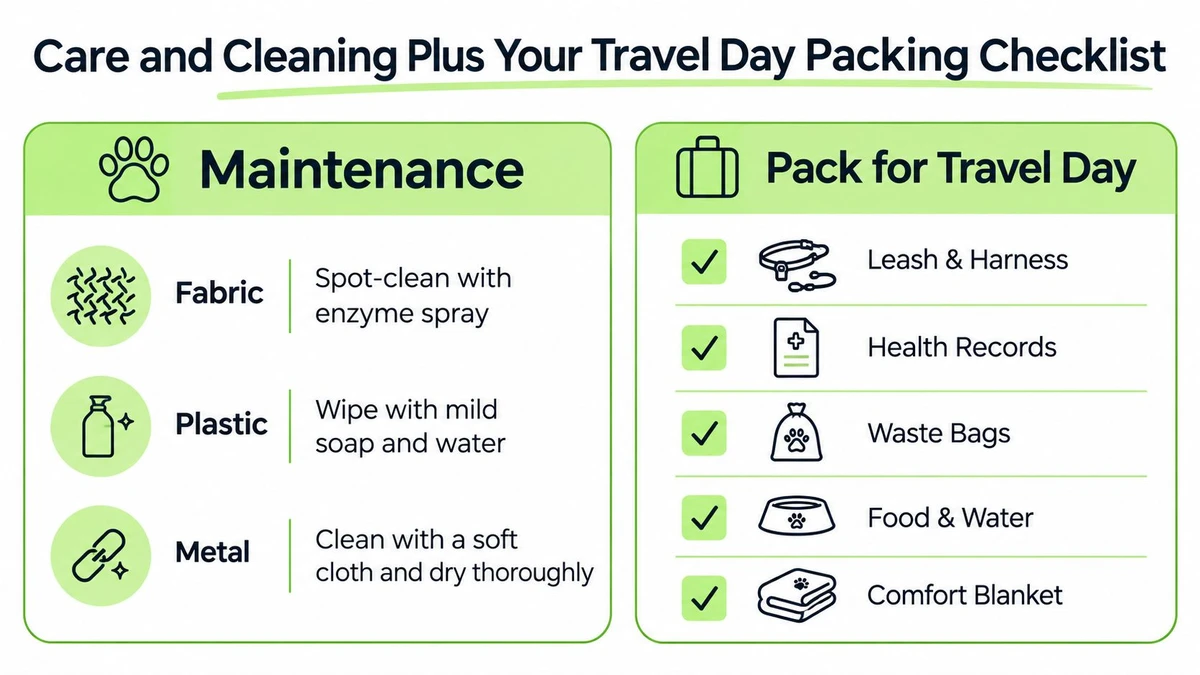
A complete sustainable pet travel kit includes: 1. Reusable stainless steel or bamboo bowls (e.g., Yeti or Beco); 2. Recycled plastic crates (e.g., Petmate); 3. Organic hemp/cotton collars (e.g., The Good Dog Company); 4. compostable waste bags; and 5. Durable, recycled toys (e.g., West Paw).
Feeding & Hydration
- Reusable Bowls: Avoid single-use plastic containers for snacks or water. Opt for Yeti’s 18/8 stainless steel or Beco’s bamboo options.
- Refillable Systems: Use refillable bowls, such as those made from sugarcane fiber, to eliminate the need for disposable service ware.
- On-the-go Hydration: Mighty Paw collapsible bowls are effective for reducing the weight of your gear while maintaining utility.
Containment & Safety
- Sustainable Crates: When traveling by car, use Petmate crates, which utilize 90% recycled plastic.
- Eco-Friendly Collars: The Good Dog Company provides collars, leashes, and harnesses made from organic cotton and hemp.
- Secure Carriers: For cats or small dogs, Petique manufactures pet carriers designed to keep animals stable and safe during transit.
Walking & Waste Management
- Recycled Leashes: United by Blue produces leashes made from recycled plastic, helping to divert ocean waste.
- Waste Bag Dispensers: Use a dispenser from United by Blue to keep compostable bags organized and accessible.
- Durable Toys: Instead of cheap squeaky toys that break quickly and end up in landfills, choose West Paw toys made from recycled materials. Timberdog notes that “Comfort + durability = fewer replacements over your dog’s lifetime, which means fewer harnesses end up in landfills.”
Zero-Waste Cleanup: Managing Messes in Eco-Lodgings
To maintain a clean environment in eco-lodgings, use targeted solutions rather than harsh chemicals. Kinn Inc. promotes a philosophy of “Travel Light. Travel Clean. Travel Klean.” to assist travelers in staying sustainable.
When managing pet accidents, avoid single-use plastic containers. Instead, utilize refillable systems like Kinn Inc. Kleanbowl refills, which allow for serving food or water without the waste associated with traditional single-use methods.
Eco-Friendly Enzyme Cleaners
When accidents occur, enzyme-based cleaners are the most effective way to break down organic matter without heavy synthetic scents. Retailers like Tomlinson’s emphasize the importance of sustainable practices, suggesting that pet parents prioritize products that do not contribute to the 300 million pounds of pet supplies entering landfills annually.
The Refillable Advantage
Carry concentrated refills to reduce your kit’s weight and plastic packaging. Using reusable cloths instead of paper towels significantly decreases your trip’s total waste output.
Mitigating Travel Stress and Environmental Footprint
Sustainability involves both your gear and your preparation. As recommended by SPCA BC, using the Pet Carrier Acclimation technique—using short trips and positive reinforcement—can prevent accidents and reduce the need for emergency supplies.
Transportation Choices
The method of transport impacts your carbon footprint. Using an EV or hybrid car can significantly cut emissions. If you are driving, remember that most pets will likely need a stop every 6 hours to maintain comfort and health.
For those purchasing new travel gear, Eagle Creek offers a 60-Day return period, allowing you to ensure the equipment meets your pet’s specific needs before committing to it long-term. This prevents the waste caused by returning items after they have been used or damaged.
FAQ
How do I know if a pet toy is truly sustainable?
Look for B Corp certification or materials like natural rubber or recycled fabric. Avoid cheap squeaky toys that break quickly, as they contribute to landfill waste. Durable, eco-friendly toys hold up better and reduce the overall frequency of replacements.
Is it better to drive or take a train with my pet?
Public transport and trains are generally more efficient and have a lower carbon footprint than driving. Even when considering the emissions from pet-related meat consumption, rail travel remains a more environmentally conscious choice for many travelers.
Can I recycle my old pet gear?
Yes, some retailers offer recycling programs. For instance, Wagging Green Pet Shop provides a recycling program for collars and leashes that can offer a discount of up to 25% for reusing hardware from your old equipment.