
Sustainable Pet Travel Gear Checklist: Eco-Friendly Essentials
PawVerde.com – To pack a sustainable pet travel kit, prioritize high-durability items like stainless steel bowls and recycled plastic crates, use compostable waste bags, and select gear made from organic hemp or recycled synthetics. This approach minimizes the 300 million pounds of pet supplies that enter landfills annually while ensuring your pet’s comfort.
Pet meat consumption alone is responsible for up to 64 million tons of CO2 release annually. Reducing the environmental footprint of your travels requires a shift from disposable, low-quality goods toward a curated selection of long-lasting, ethically manufactured gear.
How to Verify Sustainable Gear: Avoiding the Greenwashing Trap
To avoid greenwashing, verify if ‘biodegradable’ bags are home or industrial compostable by checking packaging labels. For gear, look for specific certifications like B Corp (e.g., West Paw) or high recycled content (e.g., 90% in Petmate crates) rather than vague ‘eco-friendly’ claims.
Home vs. Industrial Compostability
Many travelers fall into the trap of purchasing “biodegradable” waste bags that only break down in high-heat industrial facilities. If your eco-lodging does not provide industrial composting access, these bags may still persist in landfills. Practitioners suggest verifying if a product is specifically labeled “home compostable” to ensure it can be processed in standard backyard bins. A common failure mode occurs when users assume a “green” bag will vanish in a standard trash receptacle, which is rarely the case.
Decoding Recycled Content Percentages
Vague marketing terms often mask low-impact products. Instead of trusting the term “eco-friendly,” look for specific numeric data. For example, Petmate manufactures dog and cat crates using 90% recycled plastic. Similarly, identifying a certified B Corp, such as West Paw, provides a higher level of assurance regarding the company’s social and environmental performance. Relying on specific percentages rather than adjectives prevents the purchase of “greenwashed” items that contain only a negligible amount of recycled material.
The Weight vs. Impact Matrix: Choosing Your Travel Materials
Material selection involves balancing pack weight against long-term impact. While heavier materials like 18/8 stainless steel offer extreme durability, lightweight synthetics or bamboo are often necessary for trekking.
| Material Type | Sustainability Benefit | Weight Profile | Durability |
|---|---|---|---|
| Stainless Steel | Infinite recyclability; extremely long lifespan | Heavy | Very High |
| Bamboo | Rapidly renewable resource | Medium | Medium |
| Recycled Plastic | Diverts waste from landfills | Light to Medium | High |
| Hemp/Organic Cotton | Low pesticide use; biodegradable | Light | Medium |
The material choices in the table above impact both mobility and ecological footprint.
Heavy-Duty Durability: Stainless Steel & Wood
For travelers prioritizing longevity, stainless steel is the gold standard. Yeti produces dog bowls using 18/8 stainless steel, a grade known for its resistance to rust and extreme durability. While this adds significant weight to a travel bag, the lifetime utility reduces the need for frequent replacements. Tall Tails offers an alternative by manufacturing wooden dog bowls that feature stainless steel inserts, combining natural aesthetics with the hygienic benefits of metal.
Ultra-Lightweight: Recycled Synthetics & Bamboo
If weight is your primary constraint, look toward bamboo or recycled synthetics. Beco manufactures bamboo bowls that are lighter than metal alternatives, making them ideal for hiking. For hydration on the move, Mighty Paw offers collapsible travel dog bowl sets that minimize bulk. However, travelers should note that ultra-lightweight items can sometimes lack the ruggedness required for high-impact play, potentially leading to more frequent replacements if not handled carefully.
Essential Sustainable Travel Gear Checklist
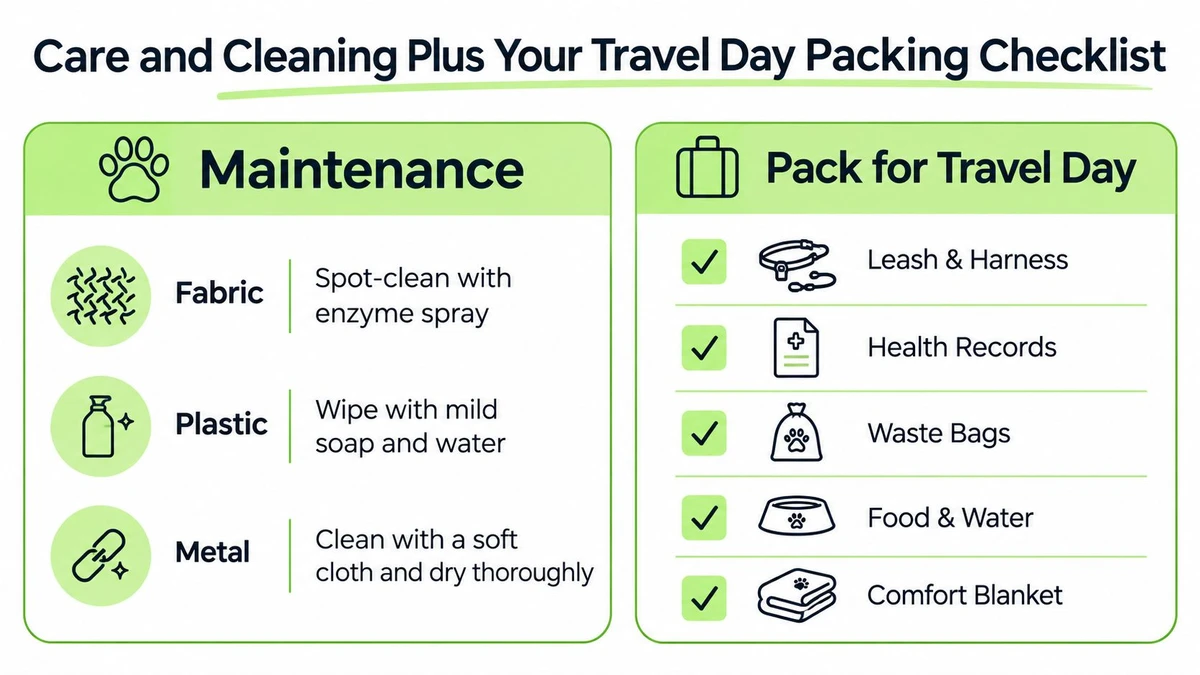
A complete sustainable pet travel kit includes: 1. Reusable stainless steel or bamboo bowls (e.g., Yeti or Beco); 2. Recycled plastic crates (e.g., Petmate); 3. Organic hemp/cotton collars (e.g., The Good Dog Company); 4. compostable waste bags; and 5. Durable, recycled toys (e.g., West Paw).
Feeding & Hydration
- Reusable Bowls: Avoid single-use plastic containers for snacks or water. Opt for Yeti’s 18/8 stainless steel or Beco’s bamboo options.
- Refillable Systems: Use refillable bowls, such as those made from sugarcane fiber, to eliminate the need for disposable service ware.
- On-the-go Hydration: Mighty Paw collapsible bowls are effective for reducing the weight of your gear while maintaining utility.
Containment & Safety
- Sustainable Crates: When traveling by car, use Petmate crates, which utilize 90% recycled plastic.
- Eco-Friendly Collars: The Good Dog Company provides collars, leashes, and harnesses made from organic cotton and hemp.
- Secure Carriers: For cats or small dogs, Petique manufactures pet carriers designed to keep animals stable and safe during transit.
Walking & Waste Management
- Recycled Leashes: United by Blue produces leashes made from recycled plastic, helping to divert ocean waste.
- Waste Bag Dispensers: Use a dispenser from United by Blue to keep compostable bags organized and accessible.
- Durable Toys: Instead of cheap squeaky toys that break quickly and end up in landfills, choose West Paw toys made from recycled materials. Timberdog notes that “Comfort + durability = fewer replacements over your dog’s lifetime, which means fewer harnesses end up in landfills.”
Zero-Waste Cleanup: Managing Messes in Eco-Lodgings
To maintain a clean environment in eco-lodgings, use targeted solutions rather than harsh chemicals. Kinn Inc. promotes a philosophy of “Travel Light. Travel Clean. Travel Klean.” to assist travelers in staying sustainable.
When managing pet accidents, avoid single-use plastic containers. Instead, utilize refillable systems like Kinn Inc. Kleanbowl refills, which allow for serving food or water without the waste associated with traditional single-use methods.
Eco-Friendly Enzyme Cleaners
When accidents occur, enzyme-based cleaners are the most effective way to break down organic matter without heavy synthetic scents. Retailers like Tomlinson’s emphasize the importance of sustainable practices, suggesting that pet parents prioritize products that do not contribute to the 300 million pounds of pet supplies entering landfills annually.
The Refillable Advantage
Carry concentrated refills to reduce your kit’s weight and plastic packaging. Using reusable cloths instead of paper towels significantly decreases your trip’s total waste output.
Mitigating Travel Stress and Environmental Footprint
Sustainability involves both your gear and your preparation. As recommended by SPCA BC, using the Pet Carrier Acclimation technique—using short trips and positive reinforcement—can prevent accidents and reduce the need for emergency supplies.
Transportation Choices
The method of transport impacts your carbon footprint. Using an EV or hybrid car can significantly cut emissions. If you are driving, remember that most pets will likely need a stop every 6 hours to maintain comfort and health.
For those purchasing new travel gear, Eagle Creek offers a 60-Day return period, allowing you to ensure the equipment meets your pet’s specific needs before committing to it long-term. This prevents the waste caused by returning items after they have been used or damaged.
FAQ
How do I know if a pet toy is truly sustainable?
Look for B Corp certification or materials like natural rubber or recycled fabric. Avoid cheap squeaky toys that break quickly, as they contribute to landfill waste. Durable, eco-friendly toys hold up better and reduce the overall frequency of replacements.
Is it better to drive or take a train with my pet?
Public transport and trains are generally more efficient and have a lower carbon footprint than driving. Even when considering the emissions from pet-related meat consumption, rail travel remains a more environmentally conscious choice for many travelers.
Can I recycle my old pet gear?
Yes, some retailers offer recycling programs. For instance, Wagging Green Pet Shop provides a recycling program for collars and leashes that can offer a discount of up to 25% for reusing hardware from your old equipment.
Eco Friendly Pet Shop Guide: Spotting Greenwashing in 2026
PawVerde.com – An eco-friendly pet shop focuses on providing sustainable, non-toxic, and low-impact supplies that reduce the 300 million pounds of pet product plastic waste generated annually. These retailers prioritize renewable materials like bamboo, recycled fabrics, and organic food to ensure both planetary health and pet safety.
The Greenwashing Red Flag Guide: Spotting Fake Eco-Claims
To spot greenwashing in pet products, look past vague labels like ‘natural’ or ‘green.’ Check for specific certifications (like PETA-approved vegan), verify if materials are truly renewable (like bamboo) rather than just recycled-looking plastics, and ensure the brand addresses end-of-life disposal rather than just using recyclable packaging.
The ‘Natural’ Trap
Marketing-led materials often masquerade as sustainable under vague descriptors. EcoFurball notes that when plastics or blended fibers appear under these ambiguous labels, it represents a significant failure in transparency. Consumers should avoid products that claim to be “green” without providing verifiable data or third-party certifications to back the assertion.
A common failure mode occurs when brands use “natural” to describe products that still contain synthetic binders or harmful additives. For instance, a toy might be marketed as natural but actually contain non-biodegradable glues. Always verify the specific material composition before purchasing.
Packaging vs. Product Longevity
EcoFurball identifies a “packaging distraction” where brands emphasize recyclable cardboard boxes to mask a short product lifespan or the use of toxic materials. True sustainability requires looking at the entire lifecycle, as minimal packaging often represents the most sustainable option.
A Lifecycle Guide: From Purchase to Compost
According to EcoFurball, “Sustainable pet products prioritise materials that regenerate, recycle, or biodegrade without releasing harmful residues.” Understanding this movement from retail shelf to final destination is essential for minimizing environmental impact.
Compostable vs. Recyclable Materials
The distinction between material types is critical to prevent waste stream contamination. While some items are designed for industrial recycling, others are intended for home composting.
- Compostable: Materials like organic hemp or bamboo that can return nutrients to the soil.
- Recyclable: Items like rPET (recycled polyethylene terephthalate) that require industrial processing.
- Upcycled: Materials repurposed from existing waste to extend their utility.
Circular Economy: The rePAWpose Model
The circular economy aims to eliminate waste by keeping materials in use for as long as possible. Awoo Pets facilitates this through their “rePAWpose” program. This initiative allows customers to send in pre-loved items to be repurposed, providing a $5 credit per product to the owner. This model reduces the need for new raw materials and prevents functional items from entering landfills.
High-Impact Swaps: A Budget-Friendly Transition Roadmap
Start your eco-transition with high-impact, low-cost swaps: replace traditional clay litter with plant-based alternatives to avoid sodium bentonite, switch to biodegradable poop bags, and move toward non-toxic, botanical-based grooming products. These changes address immediate waste and toxicity issues before investing in premium sustainable accessories.
Phase 1: Waste & Hygiene
The most immediate impact on a household’s carbon footprint often comes from daily waste management. Best Friends Animal Society suggests that switching to biodegradable or compostable poop bags made from recycled paper or plants is a primary step in reducing plastic in landfills. Additionally, replacing traditional clay cat litters is vital. These clay litters are resource-intensive because they are mined from the earth and are slow to biodegrade. Furthermore, eco-friendly alternatives can be safer for pets by avoiding sodium bentonite, which can potentially sicken or poison animals.
Phase 2: Nutrition & Grooming
Once waste management is addressed, owners can shift focus to chemical exposure. Conventional grooming products may contain harmful chemicals like parabens, phthalates, and petroleum. Best Friends Animal Society recommends using nontoxic and eco-friendly grooming and cleaning products to improve pet health. Fetch The Sun also notes that using natural cleaners may help reduce asthma and allergy symptoms in people with sensitive respiratory systems.
The Science of Sustainable Materials
Selecting materials based on their regenerative capacity and durability ensures that “green” choices are not just ethical, but functional.
Why Bamboo Wins
The Green Pet Shop notes that bamboo is a highly sustainable resource that helps combat climate change by reducing deforestation. It regenerates much more rapidly than traditional trees, making it an ideal feedstock for pet products.
The Durability Advantage
Pet Magasin highlights that eco-friendly supplies are often designed for increased durability compared to conventional options. Many standard products are optimized for lower price points and shorter lifespans, leading to increased waste.
| Criterion | Eco-Friendly Supplies | Conventional Supplies |
|---|---|---|
| Material Source | Renewable (bamboo, hemp), recycled (rPET), or upcycled. | Virgin, petroleum-based plastics and synthetic fabrics. |
| Pet Safety | Non-toxic; free of BPA and phthalates. | May contain questionable dyes or plastics. |
| Durability | Designed for longevity and repeated use. | Often designed for lower price and shorter lifespan. |
The table above illustrates the fundamental differences in how materials are sourced and managed between sustainable and standard pet supplies.
Top Eco-Friendly Retailers and Brands to Watch
As the market evolves, several key players have emerged to cater to the growing demand for planet-conscious pet care. In 2025, global eco-pet revenues from online stores reached $7.18 billion, representing 42.7% of the total market.
Online Giants
For those seeking a wide variety of vetted goods, EarthHero is a prominent retailer specializing in sustainable pet supplies. They offer various incentives, such as a 20% discount using the code PFJ20 and free carbon-neutral shipping on orders over $75. This makes large-scale sustainable shopping more accessible to a broader demographic.
Specialized Sustainable Brands
Niche brands currently lead several specific categories of the eco-pet market:
- Nina Woof: A PETA-approved vegan and cruelty-free brand focusing on dog accessories.
- Awoo Pets: Known for using eco-friendly materials and circular economy programs.
- WildOne: A direct-to-consumer brand specializing in modern, eco-conscious pet accessories.
Local vs. Online: Minimizing Your Carbon Pawprint
The method of delivery impacts the total environmental cost of pet care. While online stores are the fastest-growing distribution channel for eco-friendly pet products, choosing between local and digital options involves different ecological trade-offs.
The Case for Local Shops
Sourcing supplies from local retailers can significantly reduce the “last mile” delivery emissions. In regions like San Diego, specialized local shops provide holistic and natural options. Examples include Howlistic, which focuses on holistic care, Earthwise Pet, a family-owned shop, and Noah’s Natural Pet Market, which specializes in raw food. Shopping locally often supports the community and reduces the carbon footprint associated with long-distance shipping.
Optimizing Online Shipping
To minimize the environmental impact of digital shopping, consumers can adopt several strategies:
- Bulk Ordering: Reducing the frequency of shipments lowers the cumulative transportation energy.
- Consolidated Shipping: Choosing options that group items together rather than shipping them individually.
- Carbon-Neutral Options: Utilizing retailers that offer carbon-neutral shipping services.
DIY Sustainable Pet Care at Home
Repurposing existing household items is often the most eco-friendly way to care for pets, as it directly reduces waste and saves money.
Upcycled Toys
Best Friends Animal Society suggests several creative ways to make toys from household items:
- Rope Toys: Use old fabric strips braided together.
- Treat Puzzles: Repurpose PVC pipes to create interactive feeding games.
- Water Bottle Toys: Use old socks to encase a plastic bottle for a crinkle effect.
Zero-Electricity Cooling
During warm seasons, pet comfort can be maintained without increasing electricity consumption. The Green Pet Shop offers pressure-activated cooling mats. These mats require no refrigeration or electricity; instead, they activate via pressure to provide a cooling effect that can last for up to 3 hours after a 15-minute recharge period. This technology provides a sustainable way to manage pet heat stress.
FAQ
Is bamboo safe for pet feeding products?
Experts confirm bamboo is a sustainable resource, but owners should ensure feeding products are not combined with unsafe materials during manufacturing to avoid toxicity.
How can I tell if a pet toy is non-toxic?
According to EcoFurball, sustainable pet toys are safer if chewed because they contain no toxic dyes or plastics.
Why is clay cat litter considered less eco-friendly?
EcoFurball states that traditional clay cat litters are resource-intensive because they are mined from the earth and are slow to biodegrade.

Eco-Friendly Dog Waste Disposal: Best Sustainable Methods
PawVerde.com – The most sustainable way to dispose of dog waste is to flush it down the toilet using water-soluble bags, provided you are on a municipal sewer system. However, for those with septic tanks or yards, composting or using in-ground digesters offers a way to divert organic waste from landfills and reduce methane emissions.
The scale of the plastic crisis is massive; in 2010 alone, 192 coastal countries generated 275 million metric tons of plastic waste, with 12.7 million metric tons entering ocean ecosystems. For pet owners, this reality necessitates a shift in how daily waste is managed to avoid contributing to long-term environmental degradation.
The Greenwashing Decoder: How to Spot Real Compostable Bags
To identify truly eco-friendly bags, ignore vague terms like ‘biodegradable’ or ‘degradable.’ Instead, look for official certifications from organizations like BPI or BioCycle. Real compostable bags are designed to break down in specific environments, whereas ‘degradable’ plastics often simply fragment into microplastics that persist in the environment.
Doggy Do Good and other manufacturers have noted that pet waste bag producers frequently use misleading claims on packaging. Terms such as “dissolves” or “biodegradable” are often used to imply environmental safety without meeting rigorous industrial composting standards. This creates a failure mode where a consumer believes they are helping the planet, but is actually purchasing a product that merely fragments into smaller plastic pieces.
Red Flags in Packaging
Avoid products that rely on the following unsupported descriptors:
- “Biodegradable” (often lacks a specific timeframe or environment for breakdown)
- “Degradable” (can refer to simple fragmentation into microplastics)
- “Eco-friendly” (a generic term with no legal or scientific definition)
- “Dissolvable” (does not necessarily mean the material is compostable)
Certifications that Matter
True sustainability is verified by third-party testing. For example, Doggy Do Good produces bags with 38% vegetable-based content, while 62% of the remaining content must meet specific standards to be considered truly compostable. To ensure you are purchasing the right product, look for these specific markers:
- BPI Certification: Indicates the product meets ASTM D6400 or D6868 standards for industrial composting.
- BioCycle Guidance: Ensures the material is recognized by professional composting industry standards.
A Decision Matrix for Dog Owner: Choosing Your Method
The EPA states that “the most sustainable way to dispose of dog poop is to flush it down the toilet,” but your specific choice depends on whether you use a municipal sewer or a private septic tank.
| Disposal Method | Best For | Primary Eco-Benefit | Major Risk/Constraint |
|---|---|---|---|
| Composting | Suburban homeowners with yards | Reduces methane by diverting waste from landfills | Requires strict temperature control (140°F) |
| Flushing (Sewer) | Apartment dwellers / City residents | Uses existing municipal wastewater treatment | Risky for private septic systems |
| In-Ground Digestion | Residential yards with space | Natural breakdown in a controlled site | Requires specific commercial digester units |
| Flushing (Septic) | Not Recommended | None | High risk of septic tank failure |
Use the table above to navigate the trade-offs between different waste management strategies. Selecting an inappropriate method can result in physical blockages or infrastructure failure.
The Apartment Dweller’s Strategy
For those living in high-density urban areas, the primary goal is efficient waste removal within municipal limits. Using water-soluble bags, such as those produced by Flush Puppies, allows for direct disposal via the toilet. This method relies on the municipal sewer system to process the organic matter safely.
The Suburban Backyard Approach
Homeowners with access to land have more diverse options. They can utilize in-ground digestion systems, such as those manufactured by Doggie Doolie, or manage a dedicated composting pile. While these methods offer the highest level of diversion from landfills, they require more active management to remain safe and effective.
Safety First: The Science of Pathogen-Free Composting
To safely compost dog waste, you must reach a ‘magic number’ of 140 degrees F to kill harmful bacteria and viruses. This thermophilic process, combined with a proper carbon-to-nitrogen ratio, ensures the resulting material is safe for non-food plants like shrubs and flower beds.
The University of Florida, Institute of Food and Agricultural Sciences (UF/IFAS) emphasizes that dog waste is filled with bacteria, viruses, and nutrients that pose significant human and water quality health risks. Without reaching the necessary thermal threshold, the compost remains a biological hazard.
The 140-Degree Rule
Effective composting is a biological process that requires heat. According to the dog waste composting Recipe, owners should follow these specific steps:
- Collect ingredients and mix well with a carbon source, such as sawdust.
- Monitor the pile to ensure it reaches at least 140 degrees F.
- Turn the pile at least once a week to maintain aeration.
- Allow the process to run for 4-8 weeks until a crumbly, dirt-like mixture is achieved.
Warning: If the temperature fails to hit the 140-degree threshold, the pathogens present in the waste may survive, rendering the compost dangerous for use.
Where to Use Your Finished Compost
Even when successful, the resulting material should be handled with caution. UF/IFAS recommends using the finished compost exclusively on non-food plantings, such as flower beds and shrubs. It should never be applied to vegetable gardens or any area where food is grown, due to the inherent risk of pathogen persistence.
The Septic vs. Sewer Technicality
While flushing is a sustainable option for city residents, it is a significant risk for those on private systems. Avoid this method if your home relies on a septic tank.
Warning: To prevent septic system failure, do not flush dog waste or use “flushable” bags. This practice can disrupt the biological balance or cause physical blockages in the tank and drainage field.
The EPA suggests that septic users should keep all pet waste out of the toilet entirely. Instead, these users should look toward in-ground digesters or traditional waste collection services.
Environmental Impact: From Landfills to Oceans
Improper disposal creates long-term ecological issues. For example, diverting organic waste from landfills can specifically help cut down on planet-warming methane emissions.
The Methane Problem
Landfills are major sources of greenhouse gases. By diverting dog waste from these sites and into controlled composting environments, owners contribute to a reduction in the overall carbon footprint of pet ownership. This is a proactive way to manage the biological byproduct of domestic animals.
The Marine Ecology Risk
There is a common misconception that all “compostable” bags are safe for the water. However, research from the Plymouth Marine Laboratory indicates that these bags may not break down effectively in ocean environments. If a bag escapes the waste stream and enters a waterway, it can act similarly to traditional plastic, potentially contributing to the 12.7 million metric tons of plastic waste that enter ocean ecosystems annually.
Uncollected waste also creates safety and health hazards. According to the Penn State Extension, when rain or snow hits uncollected waste, it can carry bacteria and nutrients into storm drains and groundwater, leading to widespread contamination.
FAQ
Can I use dog waste compost in my vegetable garden?
No. Due to the risk of pathogens, UF/IFAS recommends using dog waste compost only on non-food plantings like shrubs and flower beds. The potential for bacterial or viral survival makes it unsuitable for edible crops.
Are ‘biodegradable’ bags actually better for the ocean?
Not necessarily. Research from Plymouth Marine Laboratory suggests these bags may not break down effectively in ocean environments, potentially contributing to plastic pollution rather than solving it.
How long does it take to make dog waste compost?
With proper management and temperature control, you can achieve a crumbly, dirt-like mixture in approximately 4 to 8 weeks.

How to Choose Plastic-Free Pet Grooming Tools Effectively
PawVerde.com – To choose plastic-free pet grooming tools, prioritize materials like stainless steel for longevity and bamboo for biodegradability. Inspect tools for ‘hidden plastics’ such as synthetic bristles or plastic internal mechanisms, and opt for solid shampoo bars to eliminate liquid plastic packaging entirely.
Plastic packaging pollution is projected to more than double between 2025 and 2040, making sustainable pet care a critical necessity.
How to Spot ‘Greenwashing’ and Hidden Plastics
To avoid greenwashing, look beyond the handle. A tool may have a bamboo handle but still utilize plastic bristles, synthetic rubber grips, or internal plastic mechanisms. Always verify that the bristles are natural (like boar hair) or stainless steel, and ensure the tool is not a ‘hybrid’ that is impossible to recycle or compost.
Greenwashing often involves products labeled “eco-friendly” that actually incorporate plastics or toxic dyes. This deceptive practice targets consumers attempting to reduce their environmental footprint. A common failure mode is the “partially natural” tool, where a bamboo handle is glued to a plastic base or features a synthetic rubber grip that cannot be separated for recycling.
The Bristle Test: Natural vs. Synthetic
The most frequent source of hidden plastic is the bristle set. While a handle might appear sustainable, the contact point with your pet is often nylon or polyester. To verify a tool’s integrity, perform a tactile test: natural bristles or stainless steel pins feel significantly different from the uniform, slippery texture of synthetic plastic. If the product description does not explicitly name the bristle material, assume it contains plastic.
The Hybrid Tool Trap
A hybrid tool is a product that combines materials in a way that prevents proper end-of-life processing. For example, a brush combining a wooden handle with a plastic internal spring mechanism cannot be easily composted or recycled. Practitioners report that these “mixed-material” items are a primary driver of landfill waste in the pet industry. Always check if the components are mechanically fastened rather than chemically bonded with adhesives.
- Check for “recycled plastic” claims; these may still contain toxic dyes that prevent high-grade recycling.
- Inspect internal mechanisms for metal springs instead of plastic tensioners.
- Avoid synthetic rubber grips on “natural” handles.
Selecting the Right Sustainable Materials
Choosing materials with high durability and low environmental impact is essential for long-term pet care. Selecting between renewable resources and infinitely recyclable metals depends on specific household needs.
| Material | Sustainability Profile | Durability | End-of-Life |
|---|---|---|---|
| Plastic | High environmental impact; non-renewable | Low; breaks easily | Landfill/Microplastics |
| Bamboo | Renewable; rapidly growing resource | Moderate to High | Biodegradable/Compostable |
| Stainless Steel | Infinite recyclability; high longevity | Extremely High | Recyclable |
The table above compares common materials used in pet grooming. For example, the Bamboo Groom Small Slicker Brush is priced at $15.99, offering a biodegradable alternative to traditional plastic options.
Stainless Steel: The Infinite Recyclable Option
Stainless steel is the gold standard for sustainable grooming tools. According to tryfurgo.com, “Stainless steel components are generally more durable than plastic designs.” This material is highly resistant to rust and corrosion, which is essential for tools used in wet environments. Because it can be melted down and repurposed indefinitely without losing quality, it represents a circular economy model.
Bamboo: The Biodegradable Choice
Bamboo serves as an excellent renewable resource for brush handles and combs because it grows rapidly without the need for pesticides. The Pet Beastro notes that “Bamboo is 100% natural, biodegradable, and strong for a high quality durable long-lasting grooming tool.” This makes it an ideal choice for owners who want tools that can eventually return to the earth.
Step-by-Step: Transitioning Your Grooming Kit
Adopting eco-friendly habits can be managed through a gradual replacement strategy. This approach helps ensure that new tools meet the specific needs of your pet while managing costs.
- Identify your most frequently used tool, such as a daily brush or shampoo.
- Replace just one product at a time, such as a natural shampoo or an eco-friendly tool, to assess compatibility with your pet’s coat.
- Audit your current kit for “disposable” plastic items like single-use wipes.
- Swap single-use wipes for reusable microfiber or organic cotton cloths.
- Phase out plastic-heavy items as they reach the end of their functional life.
Prioritizing a single high-impact item, such as a shampoo bar, prevents the waste of discarding functional plastic tools prematurely. This method allows you to observe how different natural materials, like bamboo or metal, perform during actual grooming sessions.
The High-Impact Swap: Liquid Shampoo to Solid Bars
STUCK SOAP identifies replacing liquid shampoo in plastic bottles with solid shampoo bars as the easiest and highest-impact change for reducing waste. This transition significantly lowers your household’s plastic footprint.
Concentrated formulas eliminate the need for bulky plastic containers. STUCK SOAP reports that “One bar replaces multiple plastic bottles and lasts for months.”
Shortcut: To maximize the life of a solid shampoo bar, store it in a well-drained soap dish to prevent it from softening in standing water.
Maintenance and End-of-Life Disposal
Organic tools like bamboo require specific care to remain functional. Proper maintenance ensures these sustainable items do not degrade prematurely.
Preventing Mold in Wood and Bamboo
Because bamboo and wooden tools are organic, they are susceptible to moisture retention. To prevent mold or cracking, always dry your bamboo brushes thoroughly after use. Avoid leaving them in damp environments, such as the bottom of a bathtub, which can lead to structural degradation and bacterial growth.
Warning: If you notice dark spots or a musty smell on a bamboo handle, discontinue use immediately to prevent exposing your pet to mold spores.
The Lifecycle of a Tool: Compost vs. Recycle
Understanding how to dispose of tools is critical for true sustainability. A pure bamboo brush can be composted, but you must first ensure all metal pins or synthetic components have been removed. If a tool is a hybrid of wood and metal, it must be disassembled. Metal components should be taken to a dedicated recycling center, while the organic handle can then be composted.
Interestingly, grooming waste itself can be repurposed. Instead of tossing shed fur in the trash, add it to your compost bin. Dog hair is rich in nitrogen and breaks down naturally, contributing valuable nutrients to your garden soil.
Cost-Per-Use: Investing vs. Replacing
While items like the Bamboo Groom Large Combo Brush may have a different upfront cost than plastic, they provide long-term value. Investing in quality materials reduces the frequency of replacement purchases.
| Investment Type | Initial Cost | Lifespan | Total Cost of Ownership |
|---|---|---|---|
| Cheap Plastic Tools | Low | Short (breaks easily) | High (requires frequent replacement) |
| Bamboo/Steel Tools | Moderate/High | Long (years) | Low (single purchase) |
The data shows that cheap plastic grooming tools break easily and become ineffective quickly, contributing directly to landfill waste. For example, a Bamboo Groom Small Slicker Brush is priced at $15.99, whereas a high-quality stainless steel tool may cost more initially but will last through multiple years of use. When you factor in the cost of replacing a $5 plastic brush every six months, the premium for a durable $15.99 or $20.99 bamboo tool is recovered within the first two years.
FAQ
Can I compost my pet’s shed hair?
Yes, dog hair is rich in nitrogen and can be added to compost bins to provide nutrients to garden soil. This turns a common grooming byproduct into a valuable resource for your garden.
Are bamboo brushes better than plastic ones?
Bamboo is a renewable and biodegradable resource. Unlike plastic brushes that contribute to landfill waste, Bamboo Groom products are designed to be 100% natural and strong.
How do I avoid plastic in pet shampoos?
Switch from liquid shampoos in plastic bottles to solid shampoo bars. According to STUCK SOAP, this is the easiest way to eliminate plastic packaging and reduce waste.