
Are Compostable Dog Poop Bags Truly Eco-Friendly?
PawVerde.com – compostable dog poop bags are plant-derived alternatives to plastic that break down into organic matter under specific conditions. However, their environmental benefit depends entirely on your local waste infrastructure; in a landfill, they may take up to 400 years to decompose and can even release methane.
When disposed of in a landfill, these bags can take between 75 to 400 years to decompose. This process often results in the release of methane.
The Compostability Reality Check: Is Your Bag Truly Eco-Friendly?
To avoid greenwashing, audit your packaging for the exact percentage of plant-based content. Many ‘compostable’ bags are only partially vegetable-based (some as low as 38%), while the remainder may consist of fossil-fuel-based materials that can break down into microplastics.
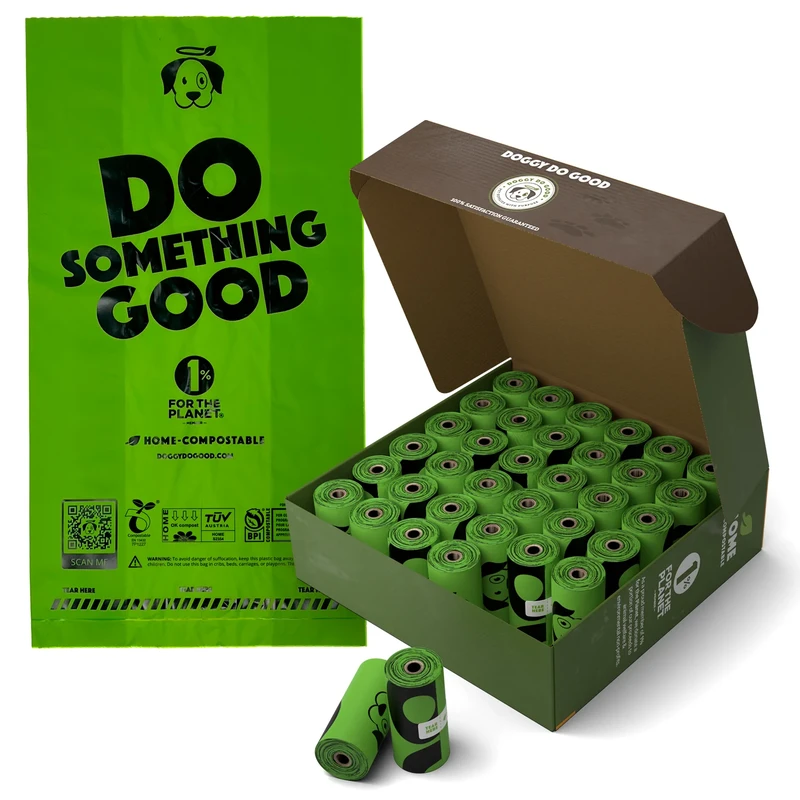
Environmental benefits are often obscured by complex manufacturing processes. For instance, Doggy Do Good bags contain only 38% vegetable-based content. The remaining 62% of the material consists of other components that do not share the same plant-derived properties.
The Microplastic Paradox
The term “compostable” does not always guarantee a return to nature without trace. Many compostable bags are made from fossil fuels treated with chemicals designed to help them biodegrade more quickly—and potentially break down into microplastics. This creates a scenario where the bag disappears from sight but leaves behind microscopic plastic fragments in the soil or water.
Decoding ‘Biodegradable’ vs. ‘Compostable'”
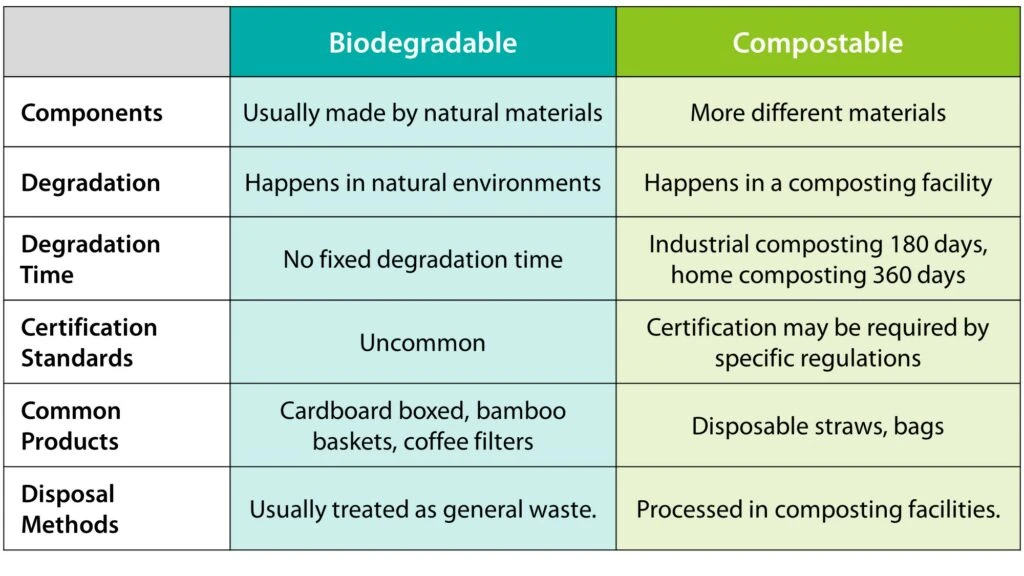
Consumers often confuse these two terms. Compostable dog poop bags are a specific subset of biodegradable bags, typically made from plant-derived materials that can break down completely into natural substances under the right conditions. In contrast, the term “biodegradable” is not tightly regulated, meaning it can be applied to a wide range of products that may not meet strict composting standards. According to the Biodegradable Products Institute (BPI), which sets and certifies composability standards for North America, the distinction is critical for effective waste management.
Infrastructure Compatibility: Should You Buy Compostable or Recycled Plastic?
If your waste is destined for a landfill or incineration, a recycled plastic bag is likely the more sensible choice. This selection minimizes new petroleum use.
In the United States, industrial composting facilities often refuse to accept dog waste. This is because municipal facilities typically reject pet waste due to biohazard concerns and the presence of potential pathogens.
| Disposal Method | Best Bag Type | Environmental Impact |
|---|---|---|
| Landfill | Recycled Plastic | Minimizes new petroleum use; avoids methane release. |
| Industrial Compost | Certified Compostable | Converts waste to organic matter (if permitted). |
| Home Compost | Certified Compostable | Highest efficiency for local nutrient cycling. |
The final destination of your waste dictates the best product. Use compostable bags if you have access to a specialized composting system; otherwise, recycled plastic serves as a practical landfill option.
Top Compostable Bag Brands for 2025
Leading compostable brands for 2025 include Earth Rated, Unni, Moonygreen, Zola Zola, and Greener Walker. When choosing, consider specific needs like Moonygreen’s 9″ x 13″ size or the durability requirements of your specific dog breed.
- Earth Rated: A widely recognized brand in the pet industry.
- Unni Pet Waste Bags: A specialized manufacturer of compostable options.
- Greener Walker: Focuses on eco-friendly waste solutions.
- Zola Zola: Offers compostable alternatives for pet owners.
- Moonygreen: Provides various sizes, including a 9″ x 13″ option.
Durability vs. Degradability: A Stress Test
The trade-off between how fast a bag breaks down and how strong it is can be significant. While degradability is the goal, some users report that the Moonygreen bags tear easily. This physical failure can lead to messy cleanup and unintended environmental exposure if the bag breaks before the waste is properly disposed of.
Size and Utility Comparison
Different breeds require different bag dimensions. While a standard bag might suffice for a small dog, larger breeds may require the 9″ x 13″ size offered by Moonygreen to ensure secure containment. Selecting the wrong size can lead to bag failure, which is a common frustration for owners of large-breed dogs.
How to Compost Dog Waste Safely at Home
To manage pet waste via a DIY Poop Digester, you must establish a controlled environment. This method allows for the decomposition of organic matter in a home setting.
To build a DIY Poop Digester, gather these materials:
- A 20-30 gallon container
- A drill
- A shovel
- Gravel
- Carbon-rich materials
- An enzyme solution
Building a DIY Poop Digester
The process begins by preparing a 20-30 gallon container. You must use a drill to create aeration holes, ensuring the waste does not become an anaerobic mess. This setup allows for a controlled decomposition process that is safer than standard garden composting.
The Importance of Carbon-Rich Materials
Successful composting requires a balance of nitrogen (from the waste) and carbon. You must add carbon-rich materials, such as wood chips or shredded paper, to the container. This prevents the mixture from becoming overly wet or smelling unpleasant, ensuring the decomposition process remains stable.
Common Pitfalls and Storage Protocols
Warning: In landfills, where waste is densely compacted and lacks oxygen, compostable bags decompose anaerobically and release methane.
When waste is densely compacted and lacks oxygen or microorganisms, compostable bags decompose anaerobically. This process releases methane, a potent greenhouse gas.
The Humidity Hazard: Protecting Your Rolls
Compostable materials are sensitive to their environment. If rolls are stored in high-humidity areas, such as a damp garage or a car during summer, the bags can become sticky or lose their structural integrity. This environmental sensitivity can cause the bags to degrade prematurely before they are even used.
Avoiding the Methane Release
To ensure a positive environmental outcome, match your bag choice to your local waste infrastructure. If your waste is destined for a landfill, the “compostable” label may not prevent methane production.
FAQ
Why don’t industrial composters accept dog waste?
Municipal facilities often reject pet waste due to biohazard concerns and the presence of pathogens like E. coli or Salmonella.
Is ‘biodegradable’ the same as ‘compostable’?
No. Compostable bags are a specific subset of biodegradable bags that must break down into non-toxic organic matter under specific conditions.
What happens to compostable bags in a landfill?
In a landfill, they decompose anaerobically (without oxygen), which can lead to the release of methane, a potent greenhouse gas.
Biodegradable vs Compostable: Key Differences for Pet Owners
PawVerde.com – While all compostable products are biodegradable, not all biodegradable products are compostable. Compostable bags are highly regulated and break down into nutrient-rich humus within 90-180 days in industrial facilities, whereas biodegradable bags often lack strict regulation and can leave harmful microplastics behind in the environment.
With 500 million plastic poop bags used globally every year, the distinction between “biodegradable” and “compostable” is a critical environmental decision.
The Greenwashing Red Flag: Identifying Vague Marketing Claims
The term “biodegradable” isn’t tightly regulated, so it can be applied to a wide range of products. This lack of oversight allows manufacturers to use environmentally friendly language without meeting specific decomposition benchmarks. According to PoopBags.com, this regulatory gap is a primary reason why consumers struggle to differentiate between truly sustainable options and those that merely change form.
Meaningless vs. Meaningful Terminology
EcoFurball notes that compostable products undergo testing and certification standards, while biodegradable products often rely on vague or unregulated claims. This distinction is vital for ecosystem health.
A common failure mode occurs when a product is labeled as “earth-friendly” but lacks a clear breakdown timeline. To avoid these traps, check for the following indicators:
- Specific certification marks (such as ASTM D6400 or EN 13432).
- A defined decomposition timeframe (e.g., 90-180 days).
- Explicit instructions for disposal (e.g., “Industrial Compost Only”).
How to spot ‘Earth-Friendly’ traps
Consumers often fall into the trap of assuming any bag that mentions “nature” is safe for the soil. However, if a bag is labeled as “biodegradable” without a certification, it might simply be a plastic bag with additives designed to fragment. This process does not result in organic matter but instead creates a persistent environmental presence. Practitioners report that relying on these unregulated claims can lead to unintended pollution in local waste streams.
The Microplastic Leakage: Why ‘Biodegradable’ Can Be Worse for Oceans
biodegradable bags pose a significant risk of ‘leakage’ because they often break down into tiny fragments rather than fully decomposing. In marine or landfill environments, these materials can shed microplastics that persist for decades, whereas certified compostable materials are designed to return to organic matter without leaving synthetic residues.
Oxo-degradable products represent a specific category of concern. These materials are designed to break into tiny fragments—commonly known as microplastics—but they never fully decompose. This fragmentation process is often mistaken for biodegradation, but it actually accelerates the distribution of plastic particles throughout the food chain. ECOLipak research suggests that these materials fail to provide the circularity promised by true composting.
The environmental impact of these fragments is substantial. While a compostable bag aims to become part of the soil, a poorly regulated biodegradable bag may simply become invisible plastic. This creates a deceptive sense of sustainability while the actual material remains in the environment for years. The failure to fully disappear means the “biodegradable” claim functions more as a change in visibility than a true biological reintegration.
Head-to-Head: Environmental Impact Metrics
Compostable bags are the clear winner in resource efficiency, requiring only 0.6L of water and producing 2.0g of CO2e per bag. In comparison, biodegradable bags use 0.8L of water and 4.1g of CO2e, while traditional plastic bags consume 1.2L of water and generate 6.2g of CO2e.
The following table provides a detailed comparison of the environmental footprint associated with each bag type based on production metrics.
| Metric (Per Bag) | Regular Plastic | Biodegradable | Compostable |
|---|---|---|---|
| CO2 equivalent (g) | 6.2g | 4.1g | 2.0g |
| Water consumption (L) | 1.2L | 0.8L | 0.6L |
| Energy consumption (kWh) | 0.05 kWh | 0.04 kWh | 0.03 kWh |
Based on the data, compostable bags require only 0.03 kWh of energy per unit. This makes them more efficient than biodegradable options (0.04 kWh) and regular plastic (0.05 kWh).
The Pathogen Paradox: Can You Actually Compost Pet Waste?
EcoFurball points out that even when pet waste bags claim compostability, the waste inside them often disqualifies the entire item from composting. While compostable products produce humus, upon degradation, which is the richest and most important part of all soils, the presence of biological pathogens in pet waste changes the safety profile of the final compost.
The Backyard Composter’s Risk
Home composting setups often lack the precise thermal control required to neutralize harmful bacteria. As EcoFurball highlights, the waste inside the bag can contaminate the entire batch. If you use a backyard bin, it is safer to use the bag as a liner for a dedicated waste stream rather than mixing it with garden compost intended for food crops.
Industrial vs. Home Composting Realities
Industrial facilities utilize specialized machinery and high-heat aerobic processes to ensure complete breakdown and pathogen destruction. This is where compostable bags are designed to function. In these controlled environments, the bag breaks down within 90 to 180 days, turning into organic matter. Home composting, by contrast, is much more variable and often fails to achieve the necessary biological stability for pet-related waste.
Disposal Decision Tree: Which Bag Fits Your Lifestyle?
Your choice should align with your local waste management infrastructure. The most sustainable option is whichever bag reaches its intended end-of-life destination.
To determine your best option, consider these three primary disposal paths:
- If you have access to a municipal green bin: Certified compostable bags are the superior choice. They are designed to decompose within 90 to 180 days in commercial facilities.
- If you use standard trash collection and a landfill: A recycled plastic bag is likely the more sensible choice. Since neither type of bag will biodegrade effectively in the anaerobic (oxygen-starved) conditions of a landfill, using a bag that minimizes production harm is more practical.
- If you use a home compost bin: Avoid using pet waste in this bin, regardless of the bag type. Instead, use bags that are certified for home use only for yard waste or food scraps.
Note that biodegradable plastics typically require 3 to 6 months to break down, but this timeline is often contingent on environmental conditions that are rarely met in standard trash bags. If you cannot guarantee the bag will reach a composting facility, the environmental benefit of “biodegradable” labels is significantly diminished.
FAQ
Is every biodegradable bag compostable?
No. As stated by Good Start Packaging, while all compostable products are biodegradable, “biodegradable” does not always mean compostable, and these products may leave microplastics behind.
What happens if I put a compostable bag in a landfill?
Compostable bags are designed for aerobic environments like industrial composting facilities. In the anaerobic (oxygen-starved) conditions of a landfill, they fail to decompose as intended.
Can I put dog poop in my backyard compost bin?
Even if the bag is “home compostable,” the pathogens in pet waste often disqualify the entire item from standard composting processes due to health and safety risks.