
Compostable Dog Poop Bags Review: Durability & Disposal Guide
PawVerde.com – The best compostable dog poop bags are those that balance material durability with verified end-of-life disposal options. While brands like Moonygreen offer home-compostable solutions, many ‘compostable’ bags require industrial facilities (55-60°C) to break down, making PCR (post-consumer recycled) plastic a more practical alternative for most urban pet owners.
compostable bags in a landfill may take nearly as long to degrade as traditional polyethylene bags, potentially releasing methane in the process.
The Real-World Failure Modes: Beyond the ‘Compostable’ Label
Compostable bags often fail in two specific ways: they can become brittle and crack in freezing temperatures or turn gummy in high humidity. Furthermore, if they end up in a landfill rather than a managed composting facility, they may not degrade at all or could release harmful methane gas.
The Temperature Trap: Brittleness vs. Stickiness
Material performance shifts drastically depending on the weather. Emily Bryson, an associate lecturer at Central Queensland University, has noted that even certified home compostable bags don’t always behave as consumers expect. In cold climates, the polymers used in many compostable varieties can lose elasticity, leading to cracks during use. Conversely, in high-humidity environments, these materials may begin to lose structural integrity prematurely, becoming gummy or difficult to tie.
The Landfill Methane Risk
A common misconception is that compostable materials are inherently better for landfills. However, landfills are often inert environments where compostable bags likely won’t degrade. If they do manage to break down under these anaerobic conditions, they can release methane, a potent greenhouse gas, into the atmosphere. Furthermore, most sorting machines and human operators at recycling or composting facilities find it difficult to differentiate between compostable plastics and traditional plastics, which can lead to contamination in recycling streams.
Material Science Cheat Sheet: PLA, PBAT, and Cornstarch
Compostable plastics are designed to look and feel like regular plastics, but their chemical composition is fundamentally different. Remmington Belford has stated that “Compostable plastics are designed to look and feel like regular plastics.” However, the underlying science reveals a complex mix of substances.
Understanding the Polymer Mix
It is a mistake to assume all eco-friendly bags are made of a single plant-based substance. In reality, compostable bags may contain both biobased and fossil-based materials. The specific blend determines how the bag stretches and holds weight. Key components often include:
- PLA (Polylactic Acid): Often derived from cornstarch, providing structure but sometimes lacking flexibility.
- PBAT: A fossil-based polymer that is fully biodegradable, often added to improve the stretch and toughness of the bag.
- Cornstarch blends: Used to increase the bio-based content of the final product.
Why Disintegration $neq$ Compostability
A critical distinction exists between a material falling apart and a material truly composting. As noted by research from Michigan State University, the item must physically fragment, but disintegration alone is not compostability. True compostability is a property of a material-plus-environment system, never of the material alone. For a bag to be considered compostable, it must break down into humus within a specific timeframe without leaving behind microplastics.
Top Rated Compostable & Eco-Friendly Brands
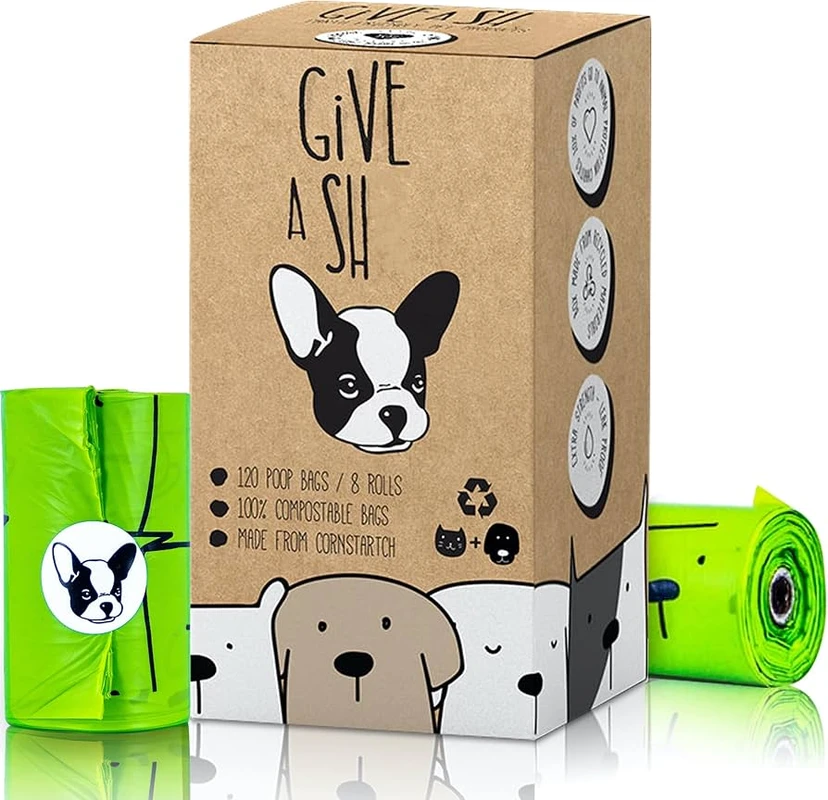
Top eco-friendly brands include Moonygreen for home composting (90-day breakdown), Give A Shit for premium compostable options, and Earth Rated for practical PCR (post-consumer recycled) plastic which uses 88% less energy than virgin plastic.
| Brand | Primary Material | Best Use Case | Key Spec |
|---|---|---|---|
| Moonygreen | Home Compostable | Home Gardeners | 90-day breakdown |
| Give A Shit | Compostable | Premium Eco-conscious | Certified Compostable |
| Earth Rated | PCR Plastic | Urban/Municipal | 65% PCR Content |
| Zola Zola | Compostable | Eco-friendly walking | Compostable |
| PoopShark | Paper | Non-plastic preference | Paper-based |
The table above compares the primary material and ideal use case for leading brands in the pet waste industry.
Home Compostable Winners
For owners with active backyard composting setups, Moonygreen stands out because it is designed for home-composting conditions, achieving breakdown in approximately 90 days. This is a significant advantage over industrial-grade bags that require much harsher conditions to disappear.
The PCR Practicality Choice
For many urban dwellers, PCR (post-consumer recycled) plastic is the more realistic environmental choice. Earth Rated utilizes 65% PCR plastic, a method that delivers environmental benefits during the manufacturing stage. Specifically, PCR plastic uses up to 88% less energy and results in a 70% reduction in emissions compared to producing virgin plastic.
Durability and Performance: The Miso Paste Test
Durability is the most frequent point of failure for eco-friendly bags. A common method used to evaluate this is the Miso paste test, which involves scraping up watered-down miso paste from a surface to check for leakage and structural integrity during a simulated “cleanup.”
Thickness Matters: Microns vs. Mess
The thickness of a bag, measured in microns, directly correlates to its ability to prevent accidents. For example, Bark & Hound bags feature a thickness of 25 microns, providing a sturdier feel. In contrast, Earth Rated bags are thinner at 15 microns, relying on the properties of the PCR material to maintain strength. Using a bag that is too thin significantly increases the risk of a puncture during a walk.
Leak-Proofing Realities
While thicker bags like the 25-micron Bark & Hound models offer more peace of mind, compostable materials can sometimes struggle with the “gummy” texture mentioned earlier. If a bag is too thin and the material begins to degrade due to heat or moisture, the risk of a leak becomes much higher than with traditional polyethylene.
The Disposal Logistics Checklist
Before purchasing a large bulk order of compostable bags, owners must verify how they will actually be discarded. Environmental benefits are lost if the disposal method is incompatible with the material.
- Check Municipal Rules: Most municipal composting programs in the US don’t accept pet waste because it can contain pathogens.
- Verify Temperature Requirements: Many industrial-grade PLA bags require sustained temperatures of 55-60°C to break down effectively.
- Identify Certification: Look for “Home Compostable” labels if you do not have access to industrial facilities.
Total Cost of Ownership: Premium vs. Practical
Switching to premium compostable options often comes with a higher price tag. For instance, using Give A Shit bags can result in an estimated annual cost of approximately $80 per dog. While this is a higher upfront investment compared to standard plastic, the cost must be weighed against the availability of local composting infrastructure and the specific environmental goals of the owner.
FAQ
Can I put compostable poop bags in my home compost bin?
Only if they are specifically certified “Home Compostable.” Brands like Moonygreen are designed for this, typically breaking down in about 90 days, whereas industrial-grade PLA bags require 55-60°C to break down effectively.
Is PCR plastic better than compostable plastic?
For many, yes. PCR (Post-Consumer Recycled) plastic is more practical because municipal composting often rejects pet waste, and PCR uses up to 88% less energy than virgin plastic during the manufacturing process.
What is the difference between biodegradable and compostable?
Compostability is a specific standard requiring material to break down into humus within a set timeframe (e.g., 180 days) without leaving microplastics, whereas “biodegradable” is a broader, less regulated term.
Recycled Materials for Pet Toys: A Guide to Eco-Friendly Safety
PawVerde.com – recycled pet toys utilize post-consumer waste—like ocean plastics, bicycle inner tubes, or recycled PET bottles—to create durable enrichment tools. While they significantly reduce carbon pawprints, choosing them requires verifying non-toxic certifications to avoid chemical leaching from phthalates or BPA, especially in heavy chewers.
Market shifts are accelerating as 67% of millennial and Gen Z pet owners in North America and Western Europe actively seek eco-certified or sustainably packaged products.
The Greenwashing Detection Guide: Verifying Recycled Claims
To avoid greenwashing, look for specific third-party certifications like the Global Recycled Standard (GRS) or OEKO-TEX. Avoid brands that claim to be ‘eco-friendly’ without specifying the exact percentage of recycled content or the source of the material (e.g., post-consumer vs. post-industrial waste).
Deceptive labeling occurs when “eco-friendly” products are blended with virgin polymers or toxic dyes. For example, a brand might claim a toy is “made with recycled materials” while providing no specific percentage of actual waste content.
Red Flags in Product Labeling
- Vague Terminology: Using terms like “earth-friendly” or “natural” without providing a breakdown of material composition.
- Lack of Percentage Data: Failing to state whether a product contains 10%, 50%, or 100% recycled content.
- Undefined Sources: Not distinguishing between post-consumer waste (items used by consumers and then recycled) and post-industrial waste (factory scraps).
Certifications to Trust
Reliable manufacturers provide documentation that transcends marketing slogans. When browsing an online shop, users should check the “Product Details” or “Sustainability” tab—often found via Product Page > Specifications > Certifications—to verify third-party validation. Ecoternatives, for example, offers 100% recycled dog plush toys, providing a clear benchmark for total material repurposing. A single 100% recycled plush toy is priced at 11.35 USD, demonstrating that high-recycled content can remain accessible.
Material Durability Matrix: Comparing Recycled Textures
Selecting the correct material requires balancing environmental impact against the specific chewing habits of a pet. A mismatch can lead to rapid degradation or, more dangerously, the ingestion of shredded fragments.
| Material Type | Chew Strength | Environmental Benefit | Cleaning Ease |
|---|---|---|---|
| Hemp | High | Very High (Renewable) | Moderate (Machine Wash) |
| Cotton | Moderate | High (Biodegradable) | Easy (Machine Wash) |
| Natural Rubber | Very High | High (Renewable) | Easy (Hand Wash) |
| TPR (Synthetic) | High | Moderate (Recyclable) | Easy (Wipe Clean) |
Material selection determines both the toy’s lifespan and its ecological footprint. While manufacturers like West Paw utilize Zogoflex® and recycled fiber stuffing to achieve 90-100% recycled content, natural fibers often provide a different structural advantage.
Natural Fibers vs. Synthetics
Hemp dog toys tend to last longer, resist fraying better, and create fewer long-term waste issues than cotton alternatives. While cotton is highly biodegradable, its tendency to fray under heavy tension can lead to faster disposal cycles. For owners prioritizing longevity, hemp offers a structural advantage that reduces the frequency of replacement.
Rubber Alternatives for Heavy Chewers
natural rubber is more eco-friendly than synthetic counterparts. Thermoplastic Rubber (TPR) is a synthetic alternative that offers a similar feel for moderate chewers but lacks the renewable origin of natural latex. For pets with extreme jaw pressure, natural rubber remains the preferred choice for durability.
Microplastic Safety and Chemical Risks
Recycled plastic toys can expose pets to microplastics and chemicals like phthalates or BPA. To minimize risk, prioritize silicone over plastic for durability and less leaching, or choose non-synthetic recycled materials like hemp and wool which are gentler on a pet’s mouth and stomach.
Recent independent research published in the Pets vs. Plastics report by EarthDay.org explores how plastic toys—even recycled ones—can expose pets to harmful chemicals like phthalates and BPA, as well as microplastics. This risk is heightened in toys that undergo significant mechanical wear during play.
To mitigate these risks, consider the biological impact of material choice. As EcoFurball notes:
Recycled doesn’t always mean synthetic. You can find recycled cotton, wool, or hemp toys, which tend to be gentler on your pet’s mouth and stomach.
This highlights a critical distinction: recycling a natural fiber is fundamentally different from recycling a polymer. Silicone serves as a safer alternative to many plastics because it is more durable and less prone to degradation and leaching.
Commercial Leaders in Circular Manufacturing
Industry leaders are currently scaling the use of second- and third-generation recycled polymers to create high-performance pet products.
The Rise of Post-Consumer Plastics
Companies are increasingly moving away from virgin plastics to meet sustainability goals. Petmate, for instance, has incorporated recycled ocean plastics and post-industrial waste into its manufacturing lines. Similarly, Betty & Butch utilizes recycled PET fabric and stuffing, repurposing 4 to 7 plastic bottles for their Sea Turtle Puppy Toy, while their dog beds can utilize up to 52 bottles.
Closed-Loop Manufacturing Examples
Moderna has demonstrated a significant commitment to this transition. Their data shows a steady increase in the use of recycled content: from 5.4% in 2020 to 10% in 2021, reaching 20% in 2022. Currently, Moderna’s annual raw material volume from recycled materials stands at 38%. West Paw also leads the sector by manufacturing Zogoflex® toys and utilizing recycled fiber stuffing, proving that 90-100% recycled content can be achieved without compromising the structural integrity required for performance-grade chew toys.
DIY Sustainability: Upcycling Household Waste
Customizing toys from existing household items provides a cost-effective way to prevent functional materials from entering landfills.
Fabric Upcycling
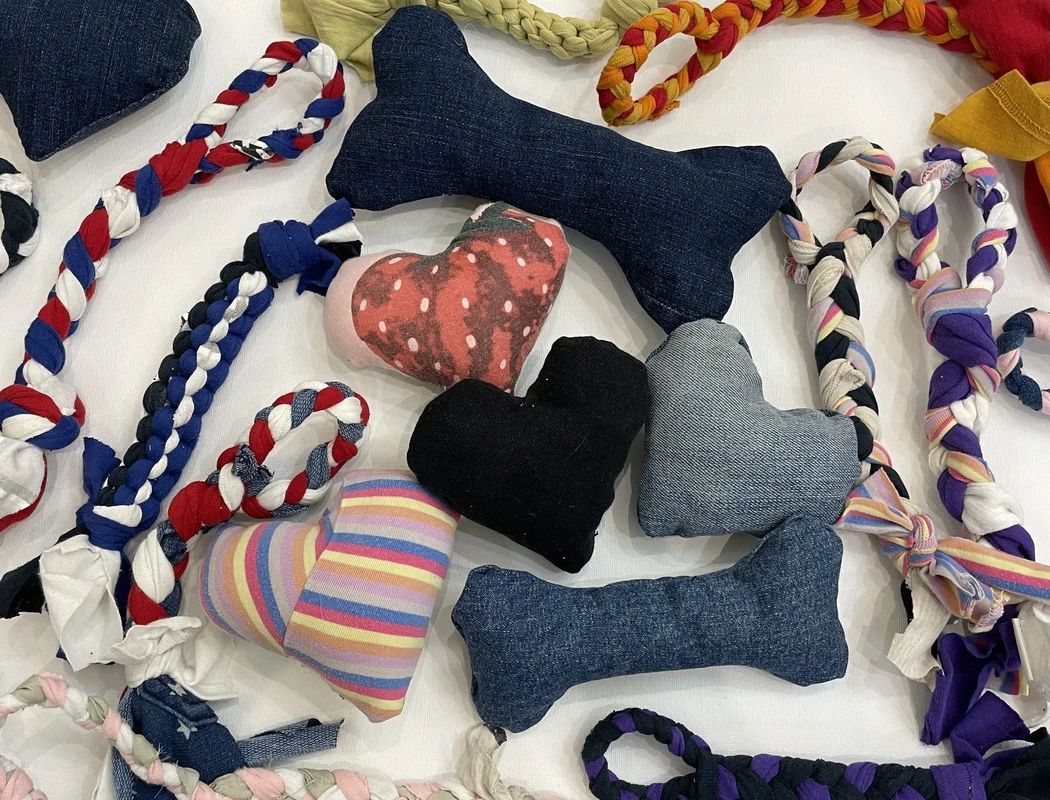
One of the simplest methods is the Braided T-Shirt Rope Toy. To make this, cut old t-shirts into 2-inch strips, tie a knot at one end, braid the strips tightly, and tie another knot at the opposite end to secure the structure.
Edible and Puzzle Alternatives
- Sweet Potato Chew Toy: Wash and peel a sweet potato, slice it into 0.5-inch sections, remove the centers with a cookie cutter, and bake at 250 degrees for 2.5 hours.
- PVC Pipe Treat Puzzle: Drill 8-10 holes in a PVC pipe, ensuring there are at least 5 holes per inch, to allow treats to roll out during play.
Safety is paramount during DIY projects. For instance, using plastic bottles carries the risk of the pet ingesting sharp fragments if the material cracks during use.
The Lifecycle Audit: From Ocean Plastic to Landfill
Sustainability requires evaluating the end-of-life potential for every product purchased.
When a toy from a brand like Petmate—which uses recycled ocean plastics—eventually reaches the end of its functional life, its ability to be repurposed depends on its material purity. If a toy is a “mono-material” (made of only one substance), it is much easier to reintegrate into the circular economy. However, most consumer toys are blends, which complicates the recycling process and often results in the product being sent to a landfill regardless of its origin.
FAQ
Are recycled plastic toys safe for heavy chewers?
Reputable brands can manufacture safe options using tested, non-toxic materials. However, owners must monitor for microplastic shedding and chemical leaching from phthalates or BPA as the toy wears down.
How many plastic bottles are saved by buying recycled toys?
The impact varies by product. For example, the Betty & Butch Sea Turtle Puppy Toy repurposes 4 to 7 plastic bottles, whereas their larger dog beds can utilize up to 52 bottles to create the necessary stuffing and fabric.
Can I recycle a pet toy once it is destroyed?
Recyclability depends on the material. Composite items, such as those combining recycled fabric with plastic stuffing, are often difficult to process, whereas mono-materials are better suited for recycling programs.